

Introduction
For overhead line stringing, pulley choice directly affects conductor protection, pull efficiency, and job-site safety. A double wheel cable pulley is used when loads, bend angles, or bundled conductors put too much stress on a single sheave. By sharing tension across two wheels, it reduces friction, limits strand damage, and improves control during long or angled pulls. This article explains where a double wheel design performs better than a standard block, which technical specifications matter most before selection, and how the right pulley can support smoother, safer stringing operations in demanding field conditions.
Why Choose a Double Wheel Cable Pulley for Stringing
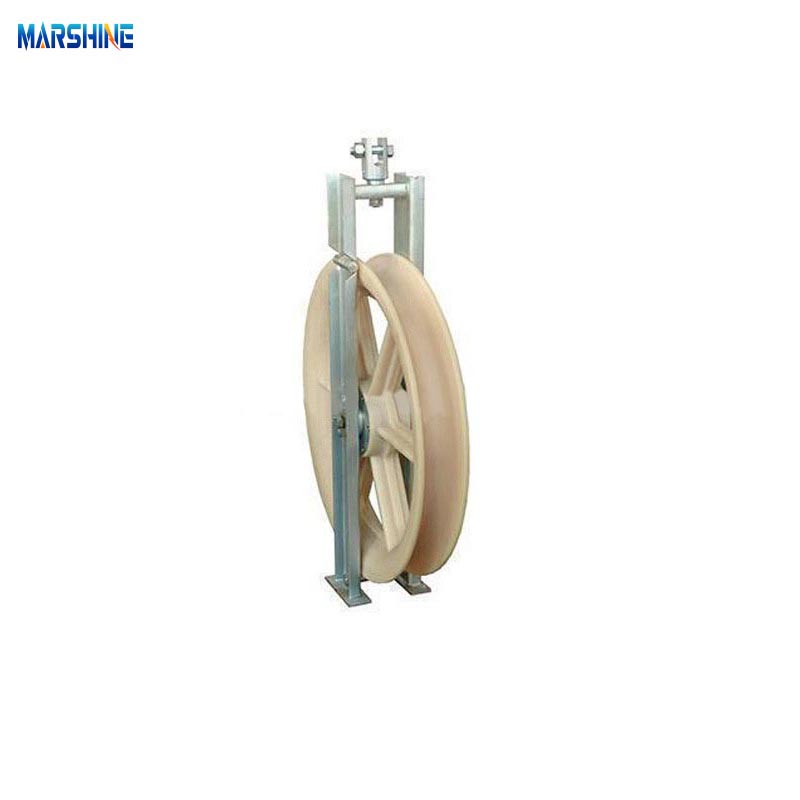
When line crews tackle high-tension grid construction, their equipment dictates both project speed and safety. A double wheel cable pulley is essential when standard single-sheave blocks cannot handle the stress of bundled conductors or sharp angle pulls. By splitting the mechanical load across two distinct rotating sheaves, this equipment minimizes conductor wear and keeps operations running smoothly. These pulleys feature rugged steel or aluminum frames designed to withstand rough outdoor environments while protecting the internal bearings from dust and moisture.
Key benefits for line stringing
The standout feature of a dual sheave stringing block is its ability to distribute pulling tension evenly. Instead of forcing a heavy conductor over a single pivot point, the dual-wheel setup provides a wider bending radius. This significantly lowers the friction coefficient, preventing the wire from flattening or suffering strand damage during long pulls. This is especially useful for aerial cable setups where maintaining conductor integrity is non-negotiable. The independent rotation of each wheel also ensures that if one side experiences a slight snag, the other continues to guide the cable safely.
Core specifications to review first
Before bringing a double wheel cable pulley onto the job site, reviewing its core specifications is crucial. Typically, safe working load capacities for these heavy-duty units range from 50kN up to 100kN for heavy transmission lines. Sheave diameters also play a major role, with standard sizes usually reaching 508mm, 660mm, or even 820mm, depending on the conductor's required bending radius. Materials matter just as much; manufacturers often offer wheels in lightweight, wear-resistant MC nylon to protect aluminum conductors, or durable die-cast aluminum with neoprene linings to match specific friction thresholds and environmental conditions.
Double Wheel vs. Single Wheel Cable Pulley
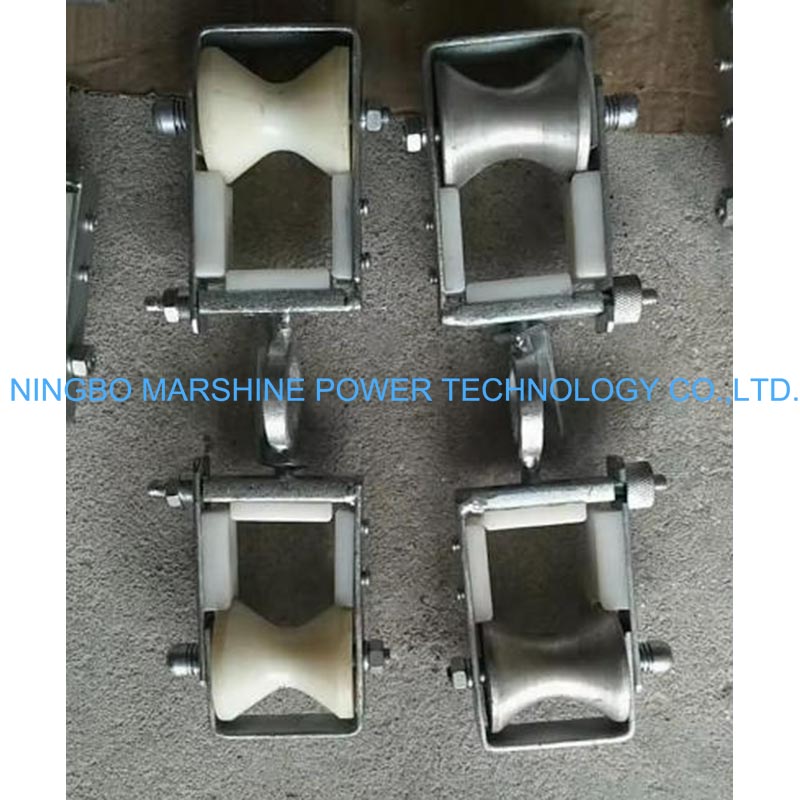
Deciding between a double wheel and a single wheel setup boils down to the specific demands of the transmission line route. While single pulleys are ideal for lightweight, straight-line pulls, the double wheel cable pulley features a broader footprint that excels in complex stringing environments. Understanding where each tool shines prevents costly equipment failures and project delays.
Main performance differences
The primary performance difference lies in load handling and operational stability. A single wheel block tends to swing or twist under extreme tension, especially when pulling bundled cables through corner towers or across varied elevations. In contrast, a two sheave conductor pulley features a wider, more balanced frame that inherently resists twisting. This dual-point contact reduces localized pressure on the cable jacket by up to 30%, making it the go-to choice for high-voltage transmission projects. Furthermore, the dual-wheel design often incorporates central guide rollers that keep the hauling rope perfectly aligned during complex pulls.
Specifications to compare
Comparing the hard numbers helps clarify which tool fits the job. Single wheel blocks usually cap out at a safe working load of around 30kN to 40kN, making them ideal for standard distribution lines. Double wheel blocks, however, are built for heavy-duty applications, handling massive tension loads with ease.
| Specification | Single Wheel Pulley | Double Wheel Pulley |
|---|---|---|
| Safe Working Load | 10kN – 40kN | 50kN – 100kN+ |
| Sheave Configuration | One central wheel | Two parallel wheels |
| Best Application | Straight distribution lines | Heavy bundles, corner angles |
| Conductor Wear | Higher localized stress | Distributed, lower stress |
| Typical Weight | 15kg – 25kg | 35kg – 85kg |
How to Evaluate Double Wheel Cable Pulley Suppliers
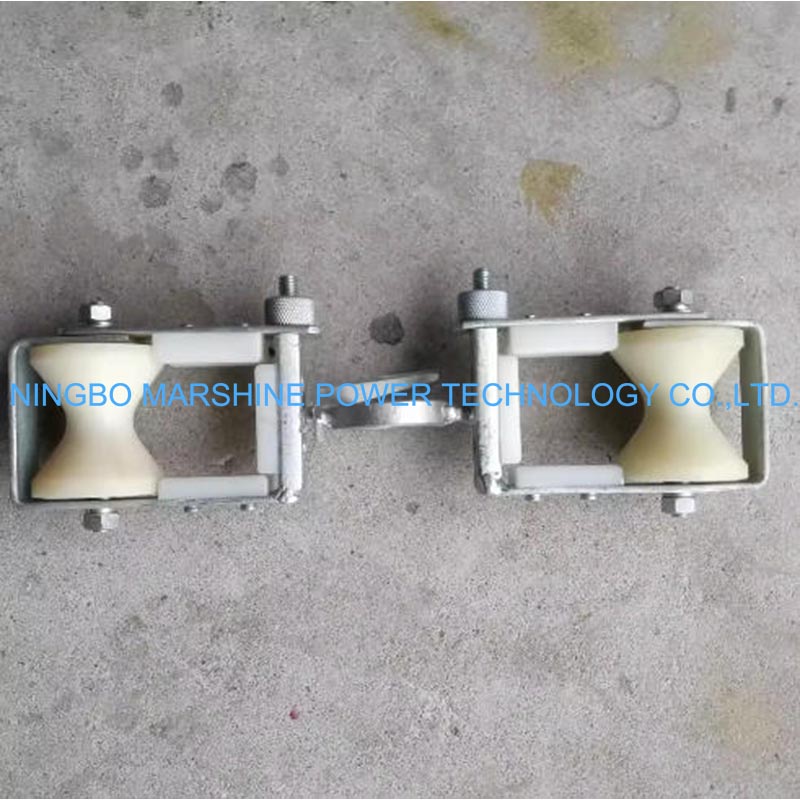
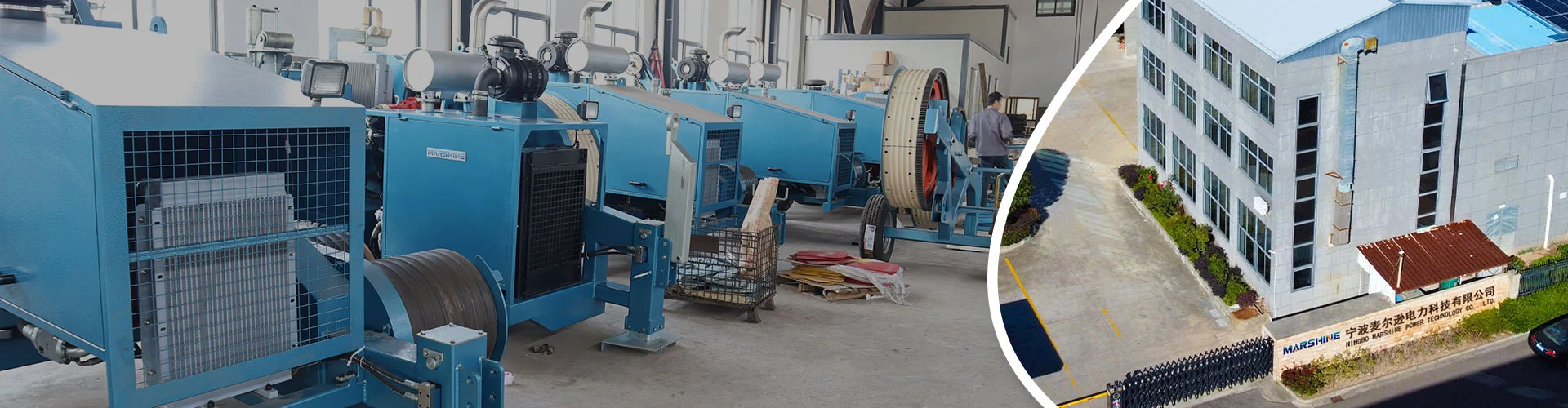
Finding the right equipment goes beyond looking at a spec sheet; it requires partnering with a manufacturer that truly understands grid construction. High-quality circuitry construction tools must be safe, easy to handle, and built to last under harsh field conditions. This means evaluating the supplier's engineering background, product features, and quality control processes just as rigorously as the double wheel cable pulley itself.
Practical selection steps
Practical selection steps start with assessing the supplier's manufacturing capabilities and product range. A specialized industry manufacturer like MARSHINE develops over a thousand kinds of tools across 20 series, covering everything from wire rope winches and fiberglass duct rodders to optical fiber cable tools. Buyers should look for suppliers that offer flexible minimum order quantities (MOQs)—often around 5 to 10 units for heavy stringing blocks—and reliable lead times of 15 to 30 days. It is also important to verify that the supplier offers advanced features, such as interchangeable nylon and aluminum wheels for pay-off pulleys, to suit different project needs.
Supplier qualifications to verify
Verifying qualifications separates reliable partners from risky vendors. Ningbo Marshine Power Technology Co., Ltd. is a prime example, operating under strict quality management systems like the GB/T19001-2008 certification, which ensures a manufacturing defect rate well below 1%. Companies that adhere to a science and technology-oriented philosophy tend to continually innovate, creating advanced, safe, and reliable products. Furthermore, a robust after-sales system featuring quality tracking and service monitoring guarantees that the equipment performs reliably in the field. When a supplier prioritizes quality and user satisfaction, contractors can trust that their high-tension stringing tools will meet the demanding standards of modern power grid construction.
Further reading:
Key Takeaways
- The most important conclusions and rationale for double wheel cable pulley
- Specs, compliance, and risk checks worth validating before you commit
- Practical next steps and caveats readers can apply immediately
Frequently Asked Questions
When should I use a double wheel cable pulley instead of a single wheel?
Use it for bundled conductors, corner towers, sharp angle pulls, or higher-tension stringing where a single sheave may twist or overload.
What load capacity is typical for a double wheel cable pulley?
For transmission stringing, typical safe working loads are about 50kN to 100kN, depending on frame design and sheave size.
Which sheave material is better for conductor protection?
MC nylon sheaves are commonly chosen to reduce friction and protect aluminum conductors; aluminum sheaves with linings can suit tougher site conditions.
How do I choose the right sheave diameter?
Match the diameter to the conductor’s bending-radius requirement; common options are 508mm, 660mm, and 820mm for heavier line work.
What should I check when buying from cable-winch.com or another supplier?
Confirm SWL, sheave diameter, material, bearing protection, frame strength, and whether the supplier supports transmission-line stringing applications with suitable models.