

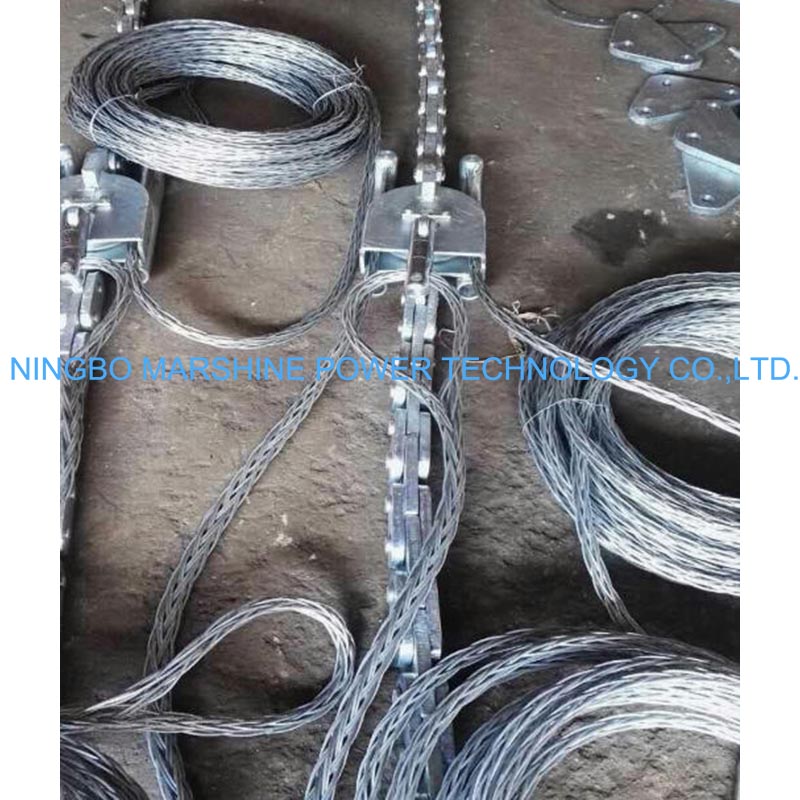
A bundled conductor pull can fail long before the line is energized if the running hardware is mismatched. On 220kV to 800kV transmission projects, a multi-bundle conductor running board must control several heavy conductors at once while passing smoothly through aerial stringing blocks under high dynamic tension. The right choice reduces twisting, conductor clash, unsafe load spikes, and costly downtime. This guide explains the practical selection factors that matter most: bundle capacity, load ratings, anti-twist design, material strength, and compatibility with winches, swivels, connectors, and stringing blocks. For contractors and utility buyers, these details directly affect site safety, pulling efficiency, and equipment service life.
Multi-Bundle Conductor Running Board Basics
Stringing overhead transmission lines requires specialized hardware to safely guide multiple heavy conductors across high-altitude towers. A multi-bundle conductor running board serves as a critical connection point between the main pilot line and the individual phase conductors, ensuring that the assembly travels smoothly and safely through the aerial stringing blocks.
Manufacturers of stringing equipment, such as MARSHINE, design these boards to manage extreme line tensions while keeping the cables correctly oriented. Understanding how these boards function and why they are necessary is the first step toward executing a safe, tangle-free cable pull on major grid projects.
Definition and Use Cases
Often referred to interchangeably in the field as a multi-bundle conductor head board, this specialized tool is essential when dealing with bundled phase conductors. Instead of pulling a single wire, modern high-voltage lines—typically ranging from standard 220kV grids up to 800kV ultra-high voltage (UHV) networks—utilize bundles of two, four, six, or eight conductors (such as ACSR, ACSS, or ACCC) to reduce corona discharge and improve transmission efficiency.
The running board's primary feature is its multiple trailing anchor points combined with strategically positioned anti-twist counterweights. These design elements ensure the cables stay properly separated and untangled during the pull between transmission towers. Without this specialized board, the individual conductors could easily twist into an unmanageable and dangerous configuration.
How Running Boards Work
The mechanics behind the board rely on calculated geometry and heavy-duty engineering. As the wire rope winch retracts the pilot line, the running board travels through the air, navigating the grooved wheels of the transmission stringing blocks mounted on each tower. Built-in features like heavy, low-hanging balance weights and integrated swivel joints allow the board to pass smoothly over the pulleys without tipping or flipping over sheaves.
While these boards are engineered to handle immense dynamic forces and prevent catastrophic line drops during sudden snags or wind-induced tension spikes, operators require specific training to manage the equipment safely. Safe working loads and ultimate breaking capacities must always be verified by project engineering calculations that account for environmental derating factors, ensuring the board's physical limits are never exceeded during a pull.
Key Specifications and Material Choices
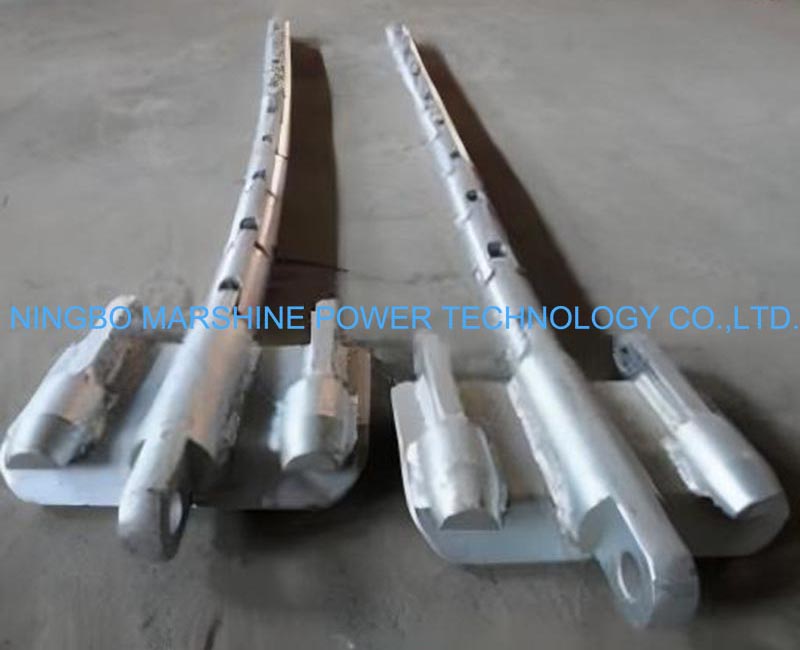
Looking at a multi-bundle conductor running board from a distance, it may appear to be a simple piece of metal. In reality, the physical specifications and material choices are strictly calculated to handle immense stress without adding unnecessary dead weight to the line span.
When planning a procurement order, matching the board's technical specifications to your specific wire rope winch and stringing blocks is essential for a smooth and efficient operation.
Bundle Capacity and Operating Specs
The first requirement is matching the bundle capacity and exact load ratings. Running boards are designed for specific configurations, most commonly 2-bundle, 4-bundle, or 6-bundle setups. Buyers must evaluate both the safe working load (SWL) and the ultimate breaking load. As an illustrative example, a heavy-duty 4-bundle board might carry an SWL of 80 kN and a breaking load of 240 kN to maintain a strict 3:1 safety factor for overhead operations. It is important to note that weather conditions and dynamic load limits can override these generic safety-factor rules, making site-specific engineering reviews critical.
A standout feature in these operating specs is the inclusion of high-strength, low-friction swivels at each connection point. These precision-machined swivels actively relieve rotational torque as the heavy cables stretch and settle under tension, preventing the pilot line from twisting or snapping.
Aluminum Alloy vs. Steel
When selecting materials, the industry standard typically involves choosing between galvanized steel and high-strength aluminum alloy. Steel boards offer high durability and are resistant to the abrasive, high-impact environments of rocky or mountainous jobsites, and their added weight provides extra stability against swaying in high winds. However, their heavier mass increases the sag on the pilot line.
Aluminum alloy boards reduce weight significantly, making them easier for the crew to rig and reducing the overall strain on the wire rope winch. Yet, this weight advantage comes with practical caveats: aluminum is more vulnerable to impact damage, requiring immediate inspection for micro-fractures if the board strikes a tower structure during a pull. Additionally, aluminum requires careful storage away from highly alkaline environments to prevent chemical degradation.
| Feature | Galvanized Steel | Aluminum Alloy |
|---|---|---|
| Weight (4-bundle avg) | 85 kg | 55 kg |
| Corrosion Resistance | Moderate (Zinc coating) | High (Natural oxidation) |
| Durability / Impact | Excellent | Good |
| Cost Premium | Baseline | +15% to 25% |
Note: The weights and costs listed above are illustrative examples only; actual specifications vary significantly by manufacturer and bundle configuration.
Choosing between the two materials often depends on the specific span length and the capacity of the pulling equipment. Anodized aluminum is favored for extra-long spans where weight reduction can drastically improve the pulling profile, while steel remains the standard for rugged, short-distance pulls.
How to Choose the Right Running Board
Picking the right multi-bundle conductor running board requires a systematic approach to evaluate specific selection criteria. Use the following decision logic to guide your procurement and ensure safe rigging:
- Step 1: Mechanical Compatibility: Ensure the running board's geometry allows it to pass smoothly through the stringing blocks. Note that while the board must clear the blocks, it is the conductor's minimum bend radius (e.g., for ACSR, ACSS, or ACCC) that primarily dictates the required sheave diameter. Mismatched geometries can cause the board to jam.
- Step 2: Load & Environmental Profiling: Calculate the maximum expected tension based on span length and wire weight. Then, account for terrain-specific geometry requirements and environmental derating factors, such as heavy icing or extreme temperatures, which lower the effective safe working load.
- Step 3: Material & Handling Selection: Weigh the trade-offs between steel and aluminum based on your wire rope winch capacity and crew assembly weight limits.
Further reading:
Key Takeaways
- Select a running board that matches the exact bundle configuration, such as 2-bundle, 4-bundle, or 6-bundle conductors.
- Verify both safe working load and ultimate breaking load against engineering calculations before any stringing operation.
- Use anti-twist counterweights and swivel-compatible designs to keep conductors separated and stable through stringing blocks.
- Confirm the running board is compatible with the project’s wire rope winch, pilot line, connectors, and aerial stringing blocks.
- Choose running boards based on actual transmission conditions, including voltage class, conductor type, span length, wind exposure, and tension requirements.
Frequently Asked Questions
What is a multi-bundle conductor running board used for?
It connects the pilot line to multiple phase conductors during overhead transmission stringing, keeping bundled conductors separated, aligned, and stable as they pass through aerial stringing blocks.
Which bundle configurations are most common?
Common running boards are designed for 2-bundle, 4-bundle, and 6-bundle conductor setups, with larger configurations used on high-voltage and UHV transmission projects.
Why are anti-twist counterweights important?
Anti-twist counterweights help keep the board balanced and prevent flipping or twisting as it travels over stringing block sheaves, reducing the risk of conductor tangles.
How do I choose the correct load rating?
Match the safe working load and ultimate breaking load to project engineering calculations, including conductor weight, line tension, span conditions, wind, and environmental derating factors.
Can one running board fit every stringing project?
No. The board must match the conductor bundle count, winch capacity, stringing block groove arrangement, expected tension, and the specific transmission line voltage class.