

Tight service areas can turn routine pipe work into a slow, knuckle-scraping job, especially when a straight wrench needs more swing room than the space allows. A 45 degree pipe wrench solves that access problem by changing the relationship between the handle, jaws, and work surface, giving technicians a stronger bite in narrow mechanical chases, utility closets, and wall-adjacent runs. This article explains how the angled head improves grip and repositioning, where the tool performs best, and when a standard wrench is still the better option. It also highlights practical buying factors—such as jaw capacity, handle length, and material strength—so crews can choose tools that match real field conditions.
How a 45 Degree Pipe Wrench Improves Access
Wrestling with stubborn pipes in cramped utility closets or narrow mechanical chases—some measuring as little as 24 inches wide—often turns a simple maintenance task into a frustrating ordeal. Standard straight pipe wrenches require a wide swing arc and ample clearance that simply do not exist in these modern plumbing and HVAC environments.
By angling the jaws relative to the handle, a 45 degree pipe wrench fundamentally changes the mechanics of gripping and turning. Professionals rely on this altered geometry to maintain a strong bite on pipes, conduits, and fittings without needing a massive operational footprint, saving time and preventing scraped knuckles.
Key Design Differences
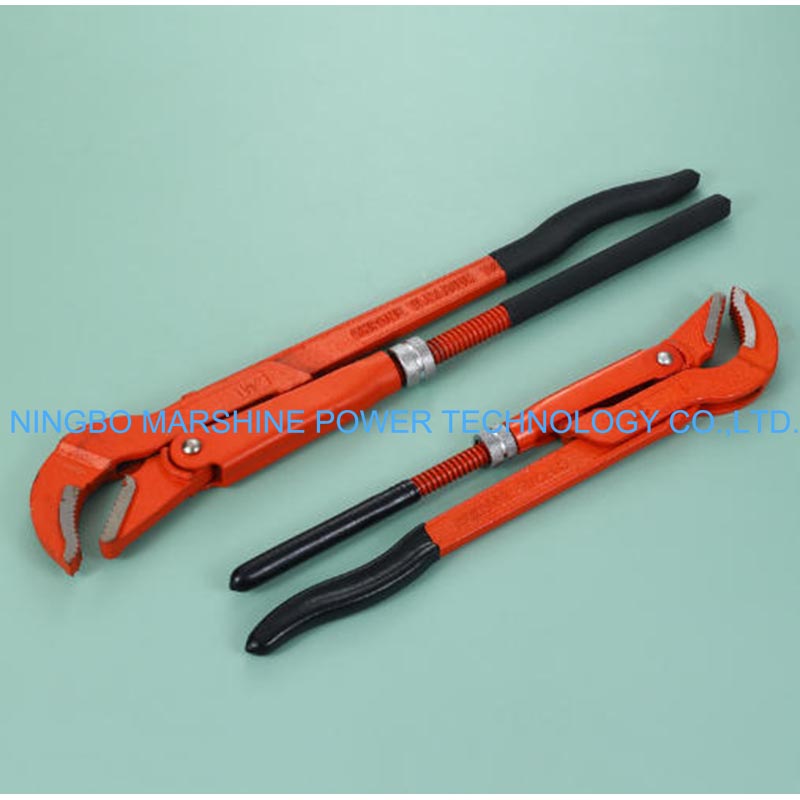
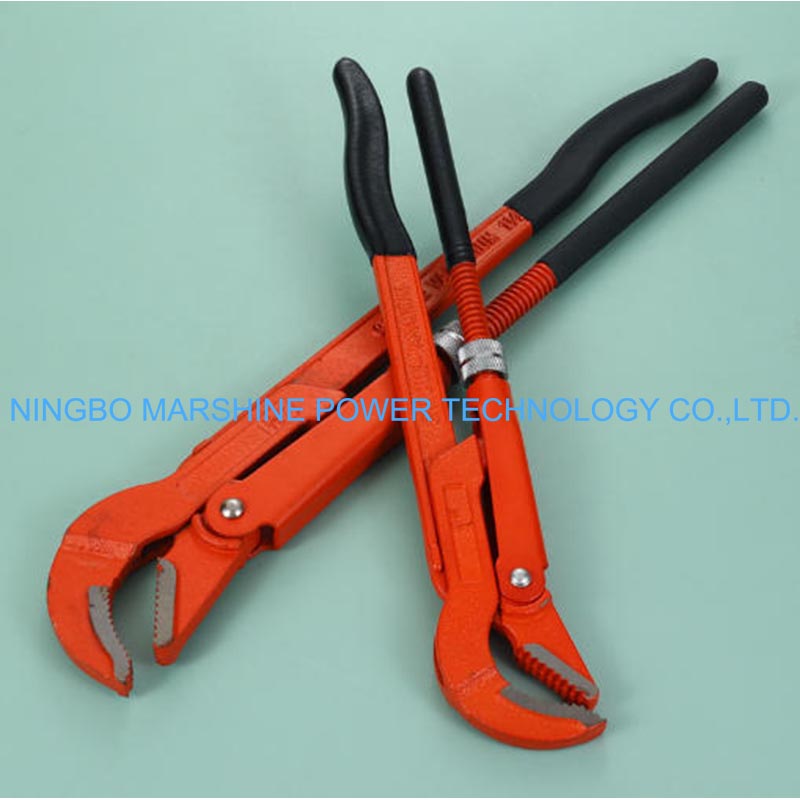
The most obvious feature of a 45 degree adjustable wrench is the offset head. Unlike a standard straight wrench that aligns the jaws perpendicularly to the handle, the 45-degree angle allows the handle to sit parallel to the work surface or adjacent pipes. This design advantage means technicians can work comfortably against flat walls or concrete floors without their hands getting trapped.
While distinct from the traditional straight-handled Swedish pattern pipe wrench, some 45-degree models borrow its S-shaped jaw design to grip materials at three points rather than two. This provides a secure, multi-point grip on round stock or flat fittings. The angled design also naturally enhances the ratcheting action, allowing operators to reposition the tool with a quick flick of the wrist within a highly restricted swing arc.
Best Use Cases in Tight Spaces
While the 45-degree offset is a functional necessity for confined operations, it is not a universal replacement for standard tools. The angled geometry can slightly reduce the tool's suitability for breaking free extremely seized fittings or for large-diameter pipe work, where a traditional straight wrench offers more direct, heavy-duty leverage. Additionally, these wrenches are poorly suited for oversized square or hex fasteners, and their aggressive teeth will severely damage finished or soft materials like copper, chrome, and PVC.
Understanding these trade-offs ensures field crews deploy the right tool for their specific environment. When deployed correctly on appropriate materials, these tools minimize physical strain while maximizing leverage. The 45-degree wrench shines in restricted zones, allowing crews to secure heavy-duty piping and hardware with minimal clearance.
Specifications Buyers Should Compare
Selecting the right wrench requires a close look at technical specifications. Buyers need to evaluate pipe capacity, handle length, and the materials used in construction to ensure the tool can handle the high torque demands of heavy industrial use. Understanding these metrics helps procurement teams balance cost with performance, ensuring field crews have reliable tools that will not bend or fail under intense pressure.
Pipe Capacity, Jaw Size, and Handle Length
The primary specifications to compare are the maximum jaw capacity and the overall handle length. A longer handle provides greater leverage, which is essential for breaking loose corroded connections, but it also requires more room to maneuver. Buyers must match the tool's dimensions to the typical pipe diameters and spatial limits of their specific projects.
The table below outlines approximate 45 degree pipe wrench specifications (often aligned with DIN or ANSI standards, though buyers should consult specific manufacturer datasheets for exact figures) to help make informed purchasing decisions:
| Wrench Size (Length) | Jaw Opening Range (Approx.) | Max Pipe Capacity (mm) | Max Pipe Capacity (inches) | Typical Weight (kg) |
|---|---|---|---|---|
| 12 inches (300 mm) | 10 mm – 48 mm | 42 mm | 1.5 inches | 0.8 kg |
| 18 inches (450 mm) | 15 mm – 65 mm | 60 mm | 2.0 inches | 1.6 kg |
| 24 inches (600 mm) | 20 mm – 85 mm | 75 mm | 2.5 inches | 2.7 kg |
An essential feature to look for is the precision of the adjustment nut. High-quality models feature heavily knurled nuts that spin freely, allowing for rapid one-handed sizing adjustments even when the operator is wearing heavy, protective work gloves.
Material, Weight, and Durability
Durability is non-negotiable for hand tools subjected to high torque and harsh environments. The best 45-degree wrenches are typically drop-forged from chrome vanadium (Cr-V) or high-carbon steel. The jaws undergo specialized heat treatment to achieve industrial hardness ratings—often specified by manufacturers around HRC 50-55—ensuring the teeth remain sharp and capable of biting into galvanized steel or black iron pipes without slipping.
Weight is another critical factor for field crews. While heavy-duty steel provides maximum strength, certain brands offer aluminum handles that reduce the tool's overall weight by up to 40%, significantly lowering fatigue during overhead work. Sourcing materials from reputable manufacturers is crucial. Facilities operating under recognized quality system certifications (such as ISO 9001) guarantee strict metallurgical standards, meaning the wrench will resist bending and jaw deformation over years of heavy, continuous use.
How to Select, Use, and Source the Right Wrench
Proper usage techniques and strategic sourcing are essential to maximize a 45 degree pipe wrench's lifespan and ensure workplace safety. By understanding the operational mechanics and partnering with established manufacturers, organizations can optimize their tooling inventory for complex plumbing and maintenance tasks.
Safe Use and Handling Tips
Improper technique can lead to slippage, rounded pipes, or severe hand injuries. The primary rule for any pipe wrench is to ensure the jaw opening faces the exact direction of the turn. This orientation allows the tool's unique geometry to bite progressively harder into the material as more pressure is applied. A vital mechanical advantage of the 45-degree model is its self-locking bite, but this only functions correctly if positioned well.
Technicians should always leave roughly a 1/2-inch gap between the pipe and the back of the hook jaw. If the pipe rests completely flush against the back of the jaw, the teeth cannot engage properly, drastically reducing grip strength.
Sourcing and Vendor Evaluation: Beyond safe handling, strategic sourcing is critical for successfully outfitting a team.
Further reading:
Key Takeaways
- Use a 45 degree pipe wrench when working in cramped areas such as 24-inch utility closets, wall-adjacent pipe runs, and narrow mechanical chases.
- The offset head reduces the swing arc needed to grip and turn pipe, helping technicians maintain leverage with less hand clearance.
- Choose jaw capacity and handle length together, because longer handles increase torque but also require more room to maneuver.
- Avoid using aggressive toothed jaws on copper, chrome, PVC, or finished surfaces because they can leave deep marks or cause damage.
- Keep a straight pipe wrench available for large-diameter pipe work or extremely seized fittings that require maximum direct leverage.
Frequently Asked Questions
What is a 45 degree pipe wrench used for?
A 45 degree pipe wrench is used to grip and turn pipes, conduits, and fittings where a standard straight wrench cannot swing freely, such as utility closets, mechanical chases, wall-adjacent runs, and tight HVAC or plumbing spaces.
How does the 45 degree jaw angle improve access?
The angled head lets the handle sit closer to a wall, floor, or nearby pipe while the jaws maintain contact. This reduces the swing arc needed to reposition the tool and helps technicians work without scraping their hands.
Is a 45 degree pipe wrench better than a straight pipe wrench?
It is better in confined spaces, but not always for heavy breakaway torque. A straight pipe wrench can provide more direct leverage on large or badly seized fittings, while the 45 degree design is best when clearance is limited.
Can a 45 degree pipe wrench damage pipes?
Yes. Like other pipe wrenches, its toothed jaws can mark or crush softer or finished materials, including copper, chrome, PVC, or polished fittings. Use it mainly on suitable metal pipe and rough hardware.
What specifications should buyers compare before choosing one?
Compare jaw capacity, handle length, wrench material, jaw design, weight, and intended pipe size. Longer handles add leverage, while shorter models are easier to maneuver in tight spaces.