

Introduction
Reliable cable terminations depend on more than matching the right lug to the right conductor; they also require enough controlled force to create a dense, uniform crimp. A hydraulic crimper improves this process by applying high pressure with consistent die alignment, helping reduce voids, uneven compression, and connection defects that can raise resistance or weaken mechanical hold. Understanding how this tool affects deformation, contact quality, and repeatability makes it easier to judge whether a finished lug will perform well in demanding electrical work. The sections that follow explain the specific ways hydraulic crimping supports stronger, safer, and more consistent cable lug connections.
Why Hydraulic Crimpers Matter for Cable Lug Quality
In modern power grid construction and heavy-duty electrical installations, the integrity of a cable connection dictates the safety of the entire system. A weak joint can lead to catastrophic failures, equipment damage, and severe safety hazards. This is exactly why relying on a specialized cable crimping tool makes all the difference. By utilizing fluid mechanics to multiply force, these devices ensure that cable lugs are compressed with absolute precision, eliminating the guesswork and physical strain associated with traditional hand tools.
Hydraulic equipment brings a distinct set of features to the table, notably the ability to deliver massive, controlled pressure ranging from 5 to over 130 tons depending on the model. This immense force is necessary to cold-weld the copper or aluminum lug directly onto the conductor strands, creating a seamless electrical path that stands up to harsh environmental stressors.
Key performance factors
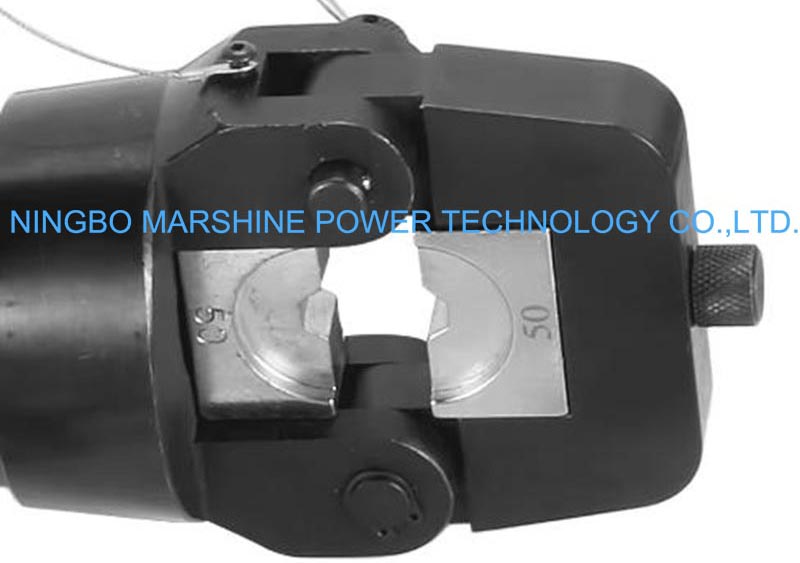
When evaluating the key performance factors of these devices, the sheer output force and die precision take center stage. A standard 12-ton hydraulic unit typically operates at an internal pressure of 10,000 PSI (700 bar). This level of compression forces the metal to flow, filling in the microscopic gaps between the individual wire strands. High-quality models feature interchangeable hexagonal dies that apply uniform pressure from all sides, reducing the void space inside the crimped lug to less than 1%.
Another standout feature is the rapid-advance pump mechanism found in modern units. This allows the dies to close quickly around the connector before shifting into a high-pressure gear for the final crimp, saving valuable time on job sites where technicians might process hundreds of connections a day.
Effects on connection reliability
The physical compression directly translates to long-term connection reliability. If a lug is under-crimped, the resulting electrical resistance causes micro-arcing and dangerous heat buildup during peak load times. Over time, thermal cycling expands and contracts the joint, eventually causing it to fail or catch fire. A proper hydraulic crimp drops the joint resistance to mere micro-ohms, essentially making the lug and the cable act as a single piece of solid metal.
Companies that specialize in power grid operation understand this dynamic perfectly. For example, MARSHINE continually develops advanced, safe, and easy-to-handle products specifically designed to prevent these grid failures. By ensuring that the connection point is mechanically secure and electrically efficient, technicians can prevent thermal runaway and significantly extend the lifespan of underground and aerial cable networks.
How Hydraulic Crimpers Improve Cable Lug Quality
Understanding the mechanics behind these tools highlights exactly how they elevate the quality of electrical connections. Unlike mechanical ratcheting tools that depend on the physical strength of the operator, hydraulic systems use fluid displacement to guarantee a consistent, repeatable result every single time.
This repeatability is a core feature that modern electrical contractors rely on. Whether a technician is working in a cramped trench or up on an aerial bucket, the tool does the heavy lifting, ensuring that the first crimp of the day is just as perfect as the last.
Critical process steps
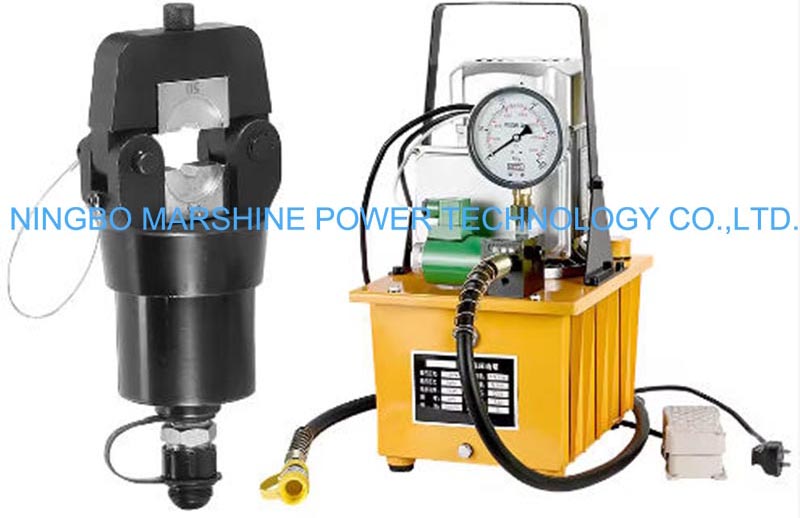
The process relies on a few critical, automated steps to ensure quality control. The operator selects the appropriate die size, positions the lug, and begins pumping the handle or triggering the battery-powered motor. As fluid fills the cylinder, the ram extends with massive force. For heavy-gauge applications, technicians often use a hydraulic crimping head paired with a separate electric hydraulic pump, which can effortlessly handle massive cables up to 1000 MCM.
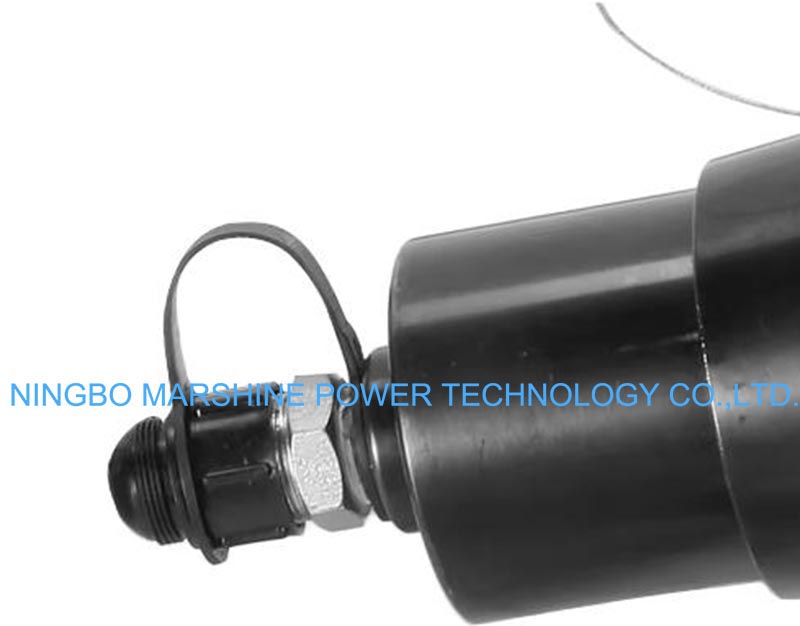
The defining feature of this process is the automatic pressure relief valve. Once the system reaches its factory-set threshold—usually around 700 bar—an internal bypass valve clicks, releasing the pressure. This audible and tactile feedback serves as a built-in quality assurance check, confirming that the lug has received the exact amount of force required for a perfect cold weld, entirely removing human error from the equation.
Comparison with manual crimping
When stacked up against manual alternatives, the advantages of fluid-powered tools become starkly apparent. Manual crimpers simply cannot generate the tonnage required for larger industrial cables, and they often leave connections vulnerable to pull-out forces and moisture intrusion.
| Specification | Manual Crimping Tools | Hydraulic Crimping Tools |
|---|---|---|
| Force Output | 1 to 3 tons | 5 to 130+ tons |
| Max Cable Capacity | Up to 4/0 AWG | Up to 1500 MCM |
| Void Ratio | 5% to 10% | < 1% |
| Operator Fatigue | High | Minimal |
| Crimp Profile | Often indent or point | Uniform hexagonal |
As the table illustrates, the jump in force output allows hydraulic models to tackle much larger cables while keeping the internal void ratio incredibly low. The uniform hexagonal crimp profile provided by hydraulic dies ensures that the structural integrity of the lug remains intact, whereas manual indent crimps can sometimes crack or deform the metal.
How to Choose a Hydraulic Crimper
Selecting the right equipment requires balancing the specific demands of the project with the technical specifications of the tool. With hundreds of options on the market, ranging from compact handheld units to massive remote-operated heads, buyers need to look closely at both the hardware features and the manufacturer's pedigree.
A well-chosen tool not only improves lug quality but also enhances job site safety and operational efficiency over a lifespan of thousands of crimping cycles.
Core specifications and compliance
Core specifications dictate what the tool can actually accomplish in the field. Buyers should look for a clear tonnage rating and a compatible stroke length. For instance, a standard distribution-level tool might feature a 12-ton output with a 42mm stroke length, accommodating die sizes from 16 sq mm all the way up to 400 sq mm. It is also crucial to verify that the tool features a robust pressure relief mechanism and a 360-degree rotating head, which allows for easier access in confined spaces.
Compliance and quality assurance are
Further reading:
Key Takeaways
- The most important conclusions and rationale for hydraulic crimper
- Specs, compliance, and risk checks worth validating before you commit
- Practical next steps and caveats readers can apply immediately
Frequently Asked Questions
Why does a hydraulic crimper improve cable lug quality?
It applies controlled high pressure to cold-weld the lug to the conductor, filling gaps and reducing resistance. The result is a stronger, more reliable connection.
What pressure level is typically used for a proper crimp?
Many hydraulic crimpers work around 10,000 PSI (700 bar), while larger models can deliver 5 to 130+ tons depending on the application.
How do interchangeable dies help crimp quality?
They match the lug size and apply even pressure from all sides, which reduces voids and helps create a uniform, secure crimp.
Why is the automatic pressure relief valve important?
It stops the crimp at the factory-set pressure, giving a consistent result and helping prevent under-crimping or over-crimping.
When should I use a hydraulic crimping tool instead of a manual one?
Use hydraulic tools for heavy-gauge or industrial cables, especially when you need repeatable, high-force crimps that manual tools cannot produce.