

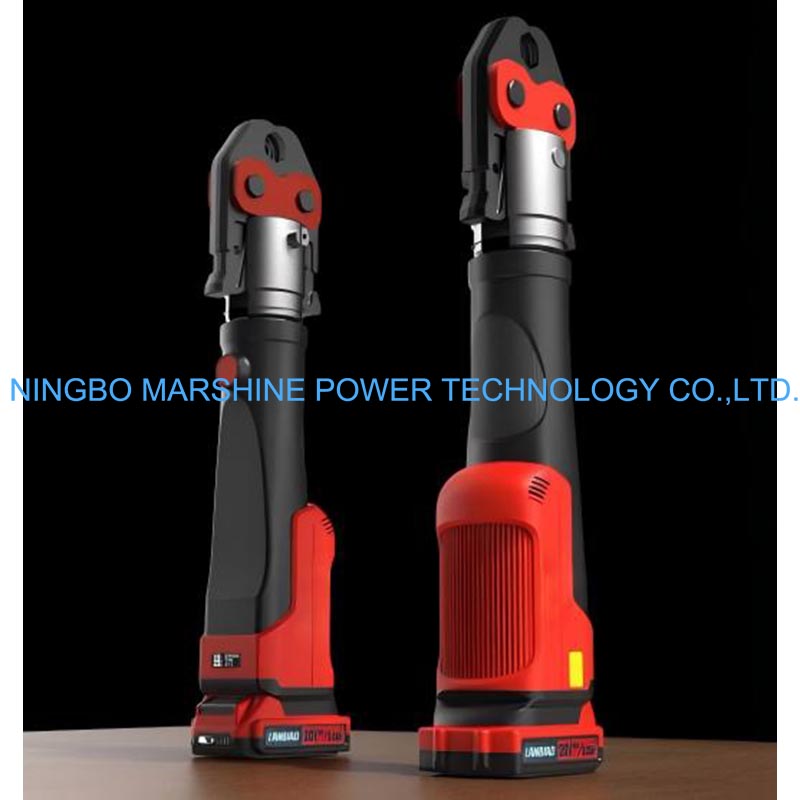
Heavy-gauge cable terminations leave little room for error: a weak 4/0 connection can become a high-resistance hot spot, reduce system reliability, and create serious safety risks. An 18V rechargeable hydraulic crimper brings controlled compression force, cordless mobility, and repeatable results to demanding field environments, from underground utility vaults to elevated service work. This article looks at why 4/0 AWG crimping requires precision, how battery-powered hydraulics reduce fatigue and variability, and which specifications—such as tonnage, die compatibility, conductor material, and recognized testing standards—matter most when selecting a tool for dependable power connections.
How an 18V Rechargeable Hydraulic 4/0 Wire Crimper Improves Field
Terminating heavy-gauge cables manually often leads to operator fatigue and inconsistent crimps, which can severely compromise connection integrity. The 18V rechargeable hydraulic 4/0 wire crimper replaces manual ratcheting mechanisms with battery-powered hydraulics, providing the consistent compression force needed for secure electrical connections. The broader industry focus remains on rigorous engineering standards to produce equipment that safely handles these high-capacity terminations day in and day out, ensuring reliable performance across utility applications.
Why 4/0 Crimping Matters in Power and Utility Applications
4/0 AWG (often pronounced "four-aught") cables represent a massive step up in power distribution. With a cross-sectional area of roughly 107.2 mm², these thick copper or aluminum conductors are the robust backbone of utility grids, large commercial feeds, and heavy industrial machinery.
Terminating them improperly creates high-resistance hot spots that can quickly lead to catastrophic thermal failures. Using precision 4/0 terminal crimping tools guarantees a high-compression mechanical connection that handles maximum ampacity without degrading over time. This level of precision ensures the lug barrel deforms uniformly around the conductor strands, eliminating voids where oxidation could occur.
Key Benefits of Battery-Powered Hydraulic Crimping
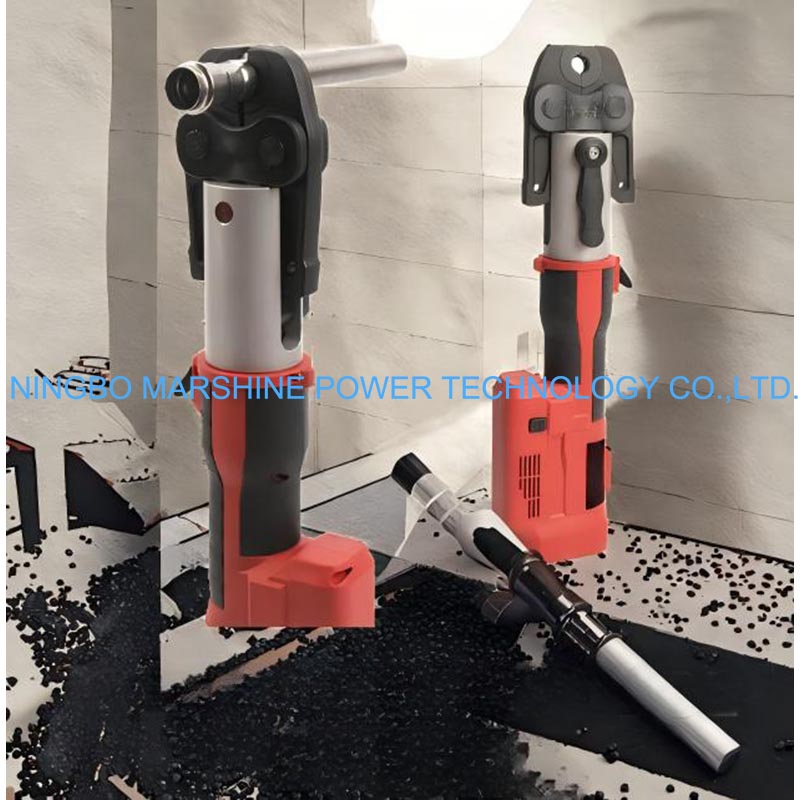
Battery-powered hydraulic crimping ensures consistent die compression mechanics across every termination. An 18V hydraulic system easily delivers anywhere from 6 to 12 tons of compression force, ensuring the lug meets exact structural specifications. This automated force guarantees that the die fully closes during each cycle, creating a highly reliable mechanical bond that eliminates the guesswork associated with manual ratcheting tools.
Furthermore, modern cordless designs allow technicians to maneuver easily in tight underground vaults or high up in aerial buckets. This reflects the broader industry push toward equipment that prioritizes mobility, safety, and reliable daily operation without the physical strain associated with manual tools.
Specifications That Determine Crimp Quality and Safety
Grid reliability depends heavily on the mechanical capabilities of termination tools. Examining technical specifications ensures equipment will perform under demanding field conditions. Manufacturers dedicated to the power industry adhere to relevant utility industry standards—such as UL 486A pull-out testing or ANSI C119.4 mechanical clauses—that buyers and inspectors actually use to validate crimp quality, rather than relying on vague quality management claims. This guarantees that every hydraulic crimping tool delivers repeatable, safe, and accurate compression.
Hydraulic Force, Die Compatibility, and Crimp Range
The core of a high-quality crimper is its hydraulic force output and die system architecture. For 4/0 cables, a tool needs to output a minimum of 6 tons (roughly 53 to 59 kN, depending on whether short or metric tons are used) of force, though 12-ton (107 to 117 kN) models are the standard for broader utility and transmission work.
Operators must explicitly ensure that the die crimp profile—whether hexagonal, indent, or circumferential—matches the specific lug profile and conductor size index. Copper and aluminum 4/0 conductors typically require different die profiles and crimp settings; matching only the broad material type is insufficient and risks galling or a weak termination. While the stated crimp range on a professional-grade unit may span from #8 AWG up to 750 MCM, covering this entire spectrum requires multiple interchangeable die sets or specialized crimping heads.
Battery Life, Cycle Time, Weight, and Safety Features
A modern 18V lithium-ion battery setup typically powers through a full crimp cycle in just 3 to 6 seconds. Depending on environmental conditions—such as extreme cold, which can limit battery performance—a standard 4.0Ah pack can yield hundreds of crimps per charge on 4/0 copper, keeping downtime to a minimum. However, operators must be aware of battery depletion and cold-weather voltage sag: if a tool loses power mid-cycle, the partially completed crimp and the affected conductor length must be physically cut away. It cannot simply be re-stripped to the same depth, which carries critical material-length implications for crews working with limited cable slack. Attempting to finish a stalled crimp manually or re-crimp it compromises the connection's mechanical integrity.
Most well-balanced units weigh between 10 and 15 pounds (4.5 to 6.8 kg) fully loaded with the battery. Built-in safety features, like automatic pressure relief valves and audible bypass clicks, confirm that maximum pressure is reached. Operators should always verify full ram retraction between cycles to ensure the tool is reset and ready for the next termination.
| Feature | Manual Ratchet Crimper | 18V Hydraulic Crimper |
|---|---|---|
| Force Output | Varies by user strength | 6 to 12 Tons (Consistent) |
| Cycle Time | 15 - 30 seconds | 3 - 6 seconds |
| Tool Weight | 5 - 8 lbs | 10 - 15 lbs |
| Ergonomic Strain | High | Low |
| Die Interchangeability | Often fixed or limited | High (Standard U-dies) |
| Calibration Needs | Minimal | Periodic professional calibration |
| Total Cost of Ownership | Low initial, high labor cost | Higher initial, lower labor/rework cost |
How to Select, Use, and Source the Right 4/0 Wire
Having the right tool is only part of the process; integrating it into daily workflows and proper procurement cycles ensures reliable operations. Sourcing from manufacturers that offer complete after-sales support and rigorous quality tracking helps maintain equipment longevity. The following steps outline how to execute a proper mechanical connection and what buyers should require when outfitting their crews.
Cable Preparation and Proper Crimping Steps
Proper cable preparation is non-negotiable for a safe connection. Start by stripping the insulation according to the specific barrel length of the lug, being careful not to nick any outer copper or aluminum strands. For aluminum 4/0 conductors, wire brushing the exposed strands and immediately applying an anti-oxidant compound is mandatory to prevent rapid oxidation. Additionally, strictly avoid using cutting lubricants during prep, as these can contaminate the conductor and degrade the electrical connection.
Before beginning, check the tool's hydraulic seals for leaks, ensure dies are kept clean and properly seated, and verify the die profile matches the lug manufacturer's specifications.
Further reading:
Key Takeaways
- Use a hydraulic 4/0 wire crimper with at least 6 tons of output force, while 12-ton models are better suited for broader utility and transmission applications.
- Match the die profile to the exact lug, conductor size, and material because copper and aluminum 4/0 cables often require different crimp settings.
- Battery-powered 18V hydraulic crimpers improve consistency by completing controlled compression cycles without the guesswork of manual ratcheting tools.
- Proper 4/0 crimping reduces high-resistance hot spots by deforming the lug barrel uniformly around the conductor strands.
- Evaluate crimping tools against recognized performance references such as UL 486A and ANSI C119.4 rather than relying only on general quality claims.
Frequently Asked Questions
What is a 4/0 wire crimper used for?
A 4/0 wire crimper is used to compress lugs or terminals onto 4/0 AWG copper or aluminum cable, creating a low-resistance mechanical and electrical connection for utility, industrial, and high-capacity power applications.
Why choose an 18V rechargeable hydraulic crimper instead of a manual tool?
An 18V rechargeable hydraulic crimper reduces operator fatigue and delivers more consistent compression force than manual ratcheting tools, which helps produce repeatable crimps in field conditions such as vaults, aerial buckets, and utility service work.
How much force is needed to crimp 4/0 cable?
For 4/0 cable, a crimper should typically provide at least 6 tons of force, while 12-ton models are often preferred for broader utility and transmission work where higher compression capacity and die versatility are required.
Do copper and aluminum 4/0 conductors use the same dies?
Not always. Copper and aluminum 4/0 conductors may require different die profiles, crimp settings, and lug compatibility. Operators should match the die to the exact conductor size, material, and connector manufacturer’s specifications.
What happens if a 4/0 cable is crimped incorrectly?
An improper crimp can create voids, oxidation points, or high-resistance hot spots. Over time, this may cause overheating, connection failure, equipment damage, or unsafe power distribution performance.