
Telescoping ladders remain a smart choice for many tasks in 2025. They offer great portability and compact storage. A quality telescoping extendable ladder, like those from industry leaders such as MARSHINE, provides excellent utility. Their effectiveness truly depends on specific needs and correct usage.

Modern telescoping ladders truly shine in their ability to be both strong and incredibly compact. They offer a solution for anyone who needs a ladder but lacks storage space. Imagine a 13.5-foot ladder that collapses down to just 36 inches! This is a reality with models like the W.steps PRIME ladder. Manufacturers use aircraft-grade aluminum to achieve this balance. This material allows the ladders to extend to precise heights. Yet, they still collapse into a small, manageable size for transport and storage. Werner's new professional-grade telescoping ladder, for example, retracts to a mere 35 inches. It even includes an attached strap and integrated handle. This makes one-handed carrying and storage in tight spaces very easy. Christopher Berg, an executive from Hultafors Group North America, confirms this focus. He states that the goal for 2025 is to deliver compact, lighter-weight ladders without compromising safety.
A telescoping ladder is like a multi-tool for elevation. Its design allows it to adapt to many different jobs around the home or on a worksite. People use them for painting projects, reaching high shelves, and cleaning gutters. They are also perfect for general maintenance work. Both the construction and home improvement sectors find them incredibly useful. Professionals often choose them for roofing tasks. This single tool can handle a wide range of needs, making it a valuable asset for many users.
Setting up a traditional ladder can sometimes be a hassle. However, telescoping ladders are designed for quick and easy deployment. Many models feature a patented one-touch release mechanism. This allows for fast and smooth setup and retraction. This design improves both user safety and efficiency. The ability to extend the ladder one rung at a time means users can adjust it to the exact height they need. This precision saves time and effort on the job.
Safety is a top priority for ladder manufacturers, and 2025 models show significant advancements. Many telescoping ladders now feature a speed-controlled mechanism. This allows the ladder to collapse slowly, which helps prevent finger injuries. Some even have a soft collapsing ability for added safety during retraction. W.steps ladders, for instance, boast a patented triangular tube design. This provides superior torsional rigidity, making them stronger and more stable than older round tube designs. They also include grooved channels on rungs to disperse dirt and moisture. Wider 3 1/8-inch rungs offer better comfort, reduce fatigue, and prevent slips.
Furthermore, some ladders incorporate DuPont™ Kevlar® Construction. This provides non-conductive rails for essential electrical protection. This makes them the only non-conductive telescoping ladders globally. Companies like W.steps and Werner ensure their products meet strict safety standards. They undergo extensive third-party testing and certifications like ANSI, EN 131, SP, NFPA 1930, and EN 1147. Smart accessories, such as Adjustable Safety Feet and Top Support, are also being developed to enhance stability and versatility even further. The BILCO Company's LadderUP, a telescoping safety post, also improves access to roof hatches and manholes by offering a stable handhold with an automatic locking feature.
While telescoping ladders offer amazing compactness when stored, some models can still feel heavy. Manufacturers build them with strong materials like aircraft-grade aluminum. This makes them durable, but it also adds weight. A robust 15-foot model might weigh more than a traditional step stool. Users should consider this weight if they need to carry the ladder long distances.
Telescoping ladders sometimes have a higher initial price than basic traditional ladders. This is due to their complex design and advanced safety features. However, consider their long-term value. A well-maintained aluminum ladder, like many telescoping models, can last 10 to 20 years. With proper care, this lifespan can even extend to 15 to 25 years. This durability makes the initial investment worthwhile over time.
These ladders have many moving parts. This means they require more attention than a simple A-frame ladder. Users must regularly clean and inspect the rungs and locking mechanisms. Dirt or debris can affect how smoothly the ladder extends and retracts. Proper care ensures the ladder remains safe and functional for its long lifespan.
A telescoping ladder offers great versatility, but it does have limits. It is not ideal for tasks needing extensive vertical ascension beyond its maximum reach. Users must always check the ladder's weight capacity. Exceeding this limit, especially when carrying heavy tools or equipment, can compromise safety. For tasks demanding extreme stability or durability, like heavy construction work, a traditional, fixed-height ladder might be a better choice. The complex mechanisms also make inspection and maintenance more involved than with simpler ladder types.
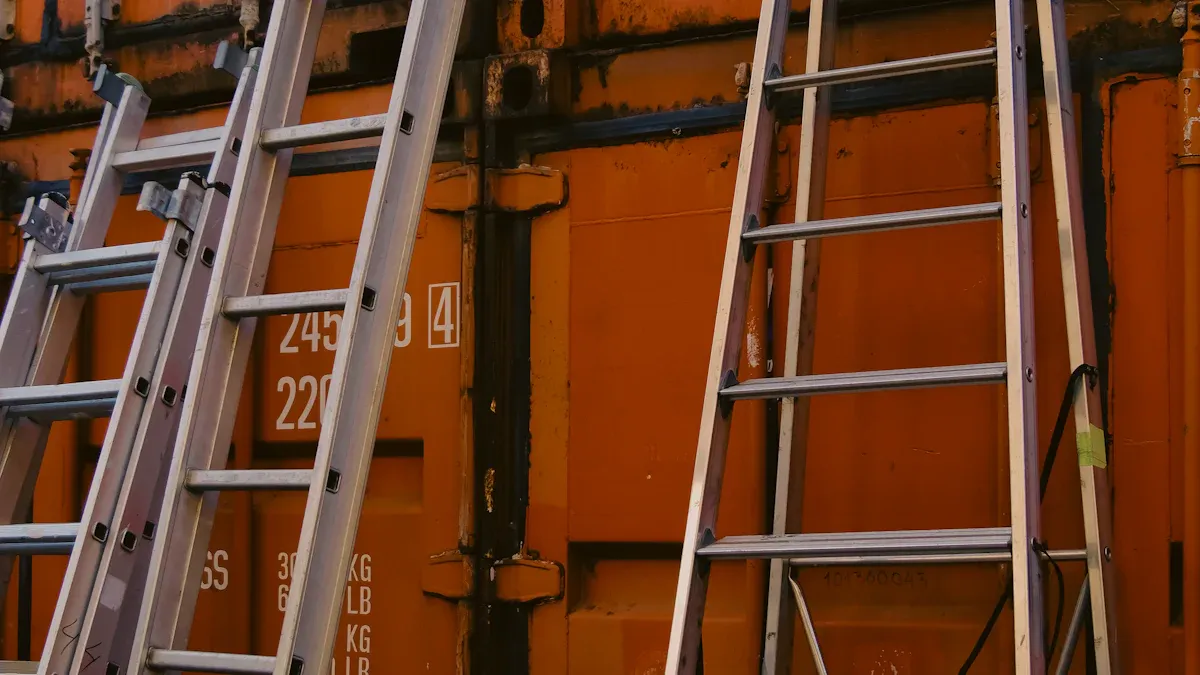
When you choose a telescoping ladder, safety certifications are not just a suggestion; they are a must. These certifications show that the ladder meets strict safety standards. Look for labels like EN131, which is a European standard, or ANSI (American National Standards Institute). These marks mean independent organizations have tested the ladder. They confirm the ladder can handle its stated weight and will not fail under normal use. Always check for these certifications before you buy. They give you peace of mind.
The materials a manufacturer uses directly impact a ladder's strength and lifespan. In 2025, premium materials are key for a reliable telescoping ladder.
These high-quality materials ensure your ladder lasts a long time and performs safely.
A ladder's weight capacity tells you how much weight it can safely hold. This includes your body weight, tools, and any materials you carry. Always check the duty rating.
Choosing a ladder with the right weight capacity ensures your safety and the ladder's stability.
Modern telescoping ladders focus on making your work easier and safer. Ergonomic features improve comfort and reduce strain.
These thoughtful design elements make using a telescoping ladder much more comfortable and secure.
Homeowners often face challenges with storage. Traditional ladders take up a lot of room in garages or sheds. A compact design helps homeowners with limited space. They can easily store these ladders in a closet or even under a bed. This makes them a practical choice for urban living or smaller homes.
DIY enthusiasts find these ladders incredibly useful for many projects. They can use them for tasks like gutter cleaning or painting. They also help with construction work and electrical tasks. People use them to redecorate a bathroom or install a new dining room light fixture. Hanging wallpaper, decorating a nursery, or creating a focal gallery wall also become easier. Installing garage shelving or a bike rack are other common uses. Their versatility makes them a favorite for home improvement projects.
Many professionals need tools they can easily transport. Electricians, plumbers, and contractors often choose these ladders. They are also ideal for estimators, inspectors, and roofers. These professionals need elevated access at various job sites. The ladder's portability allows them to move quickly between locations. This saves time and effort on busy workdays.
Anyone who values convenience and efficiency will appreciate these ladders. They set up quickly and easily. This means less time wasted on preparation. Their adjustable height feature allows users to get the exact reach they need. This precision makes tasks safer and more efficient. They are a smart tool for anyone who wants to get the job done right and fast.
In 2025, the telescoping ladder remains a highly effective and smart tool. They are ideal where portability, compact storage, and versatility are paramount. Continuous innovation in safety and design solidifies their value, with aluminum still dominating the market. They are a practical and efficient choice for many users, though not a universal replacement.
Yes, modern designs prioritize safety. They feature slow-close systems and clear lock indicators. Always look for ANSI or EN131 certifications for assurance.
They become very compact. Many models collapse to under 3 feet. This allows easy storage in tight spaces. They often include carrying straps too.
Yes, they are very user-friendly. Many have one-touch release mechanisms for quick setup. You can adjust them to the exact height needed for your task.