

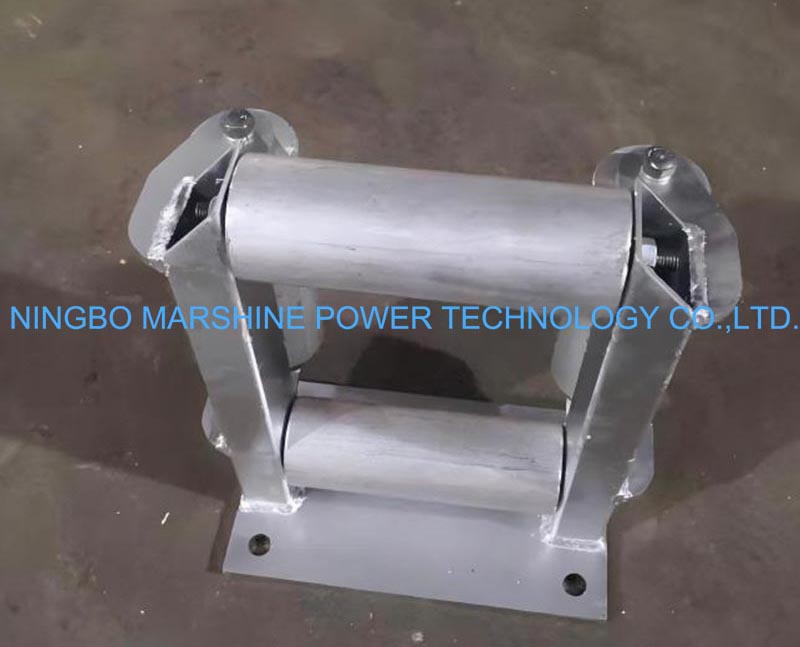
In cable installation, friction is not a small detail—it can decide whether a pull finishes cleanly or ends with damaged insulation, overloaded equipment, or costly rework. A guiding roller is one of the simplest but most important parts of a cable pulling setup, supporting the cable as it moves from reel to route while controlling contact, bend direction, and pulling resistance. This article explains how guiding rollers work, where different styles are used, and what specifications matter on site, including load capacity, roller diameter, frame stability, and bearing design. For crews planning utility, telecom, or industrial cable runs, understanding this equipment helps protect both the cable and the pulling system.
What Is a Guiding Roller in Cable Pulling Equipment
When tackling complex utility or telecom runs, a guiding roller is a critical component of the job site. This essential piece of gear physically supports heavy cables, keeping them off the abrasive ground and safely guiding them through trenches or duct banks. A high-quality guiding roller utilizes a low-friction rotational design, which prevents jacket damage and drastically reduces the overall pulling tension required from the pulling equipment.
Without these rollers, friction coefficients increase significantly, leading to potential line failure or equipment strain. They are engineered for high durability to protect expensive cabling, offering a reliable pathway from the reel to the final termination point.
Core Function and Use Cases
At its core, the guiding roller acts as a protective mechanical bridge. Different geometries serve specific environments: straight-line rollers support long trench runs, corner and manhole rollers navigate sharp 90-degree bends or vault entries, and elevated bridge rollers guide cables into duct banks. You will typically see them deployed heavily in large-scale cable installation equipment setups, where maintaining the physical integrity of the cable is just as critical as the speed of the pull.
To survive these environments, these rollers are designed to withstand harsh outdoor conditions and resist tipping over under severe lateral strain during corner pulls.
Key Product Specifications
Specifications dictate performance in the field, and understanding these parameters is crucial. As illustrative examples from specific product families, standard straight-line guiding rollers often feature safe working load capacities ranging from 500 kg up to 2,000 kg for larger industrial applications. Roller wheel diameters frequently sit between 130 mm and 200 mm to accommodate various cable outer diameters (OD) without inducing micro-bends. However, these figures are not universal industry standards; crews must always direct their planning to OEM documentation and project engineering specifications.
Modern units typically feature robust steel tubular frames with wide bases for stability, alongside sealed, dirt-proof precision bearings. These bearings ensure the roller can handle continuous rotation under load without seizing in muddy or dusty trench conditions.
Guiding Rollers vs Other Cable Pulling Tools
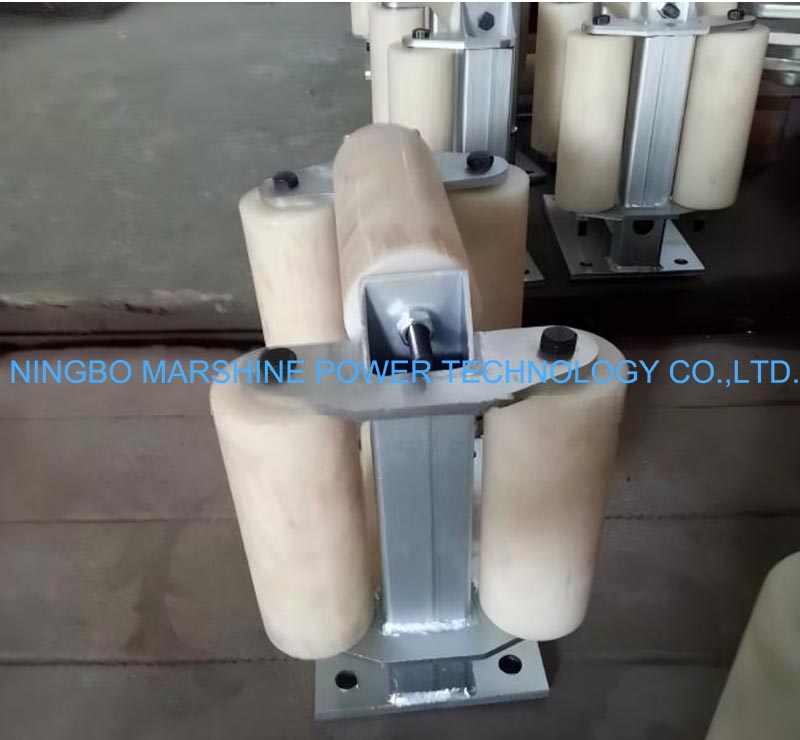
It is easy to confuse various tools on a busy job site, but guiding rollers serve a distinct purpose compared to other pulling gear. While tensioners and cable pulling socks physically grip or pull the line, guiding rollers exist strictly to manage the physical routing and friction of the heavy conductor.
Their low center of gravity keeps trench routing secure and prevents the cable from jumping the track—a stark contrast to suspended aerial tools.
Comparison Table by Application
To understand exactly where guiding rollers fit into the broader ecosystem, it helps to look at typical use cases and functional roles. Here is a quick breakdown of how they compare to other common tools in the field.
| Tool Type | Primary Application | Load-Bearing Status | Core Functional Design |
|---|---|---|---|
| Guiding Roller | Trench / Ground Routing | Heavy load-bearing support | Low friction ground support |
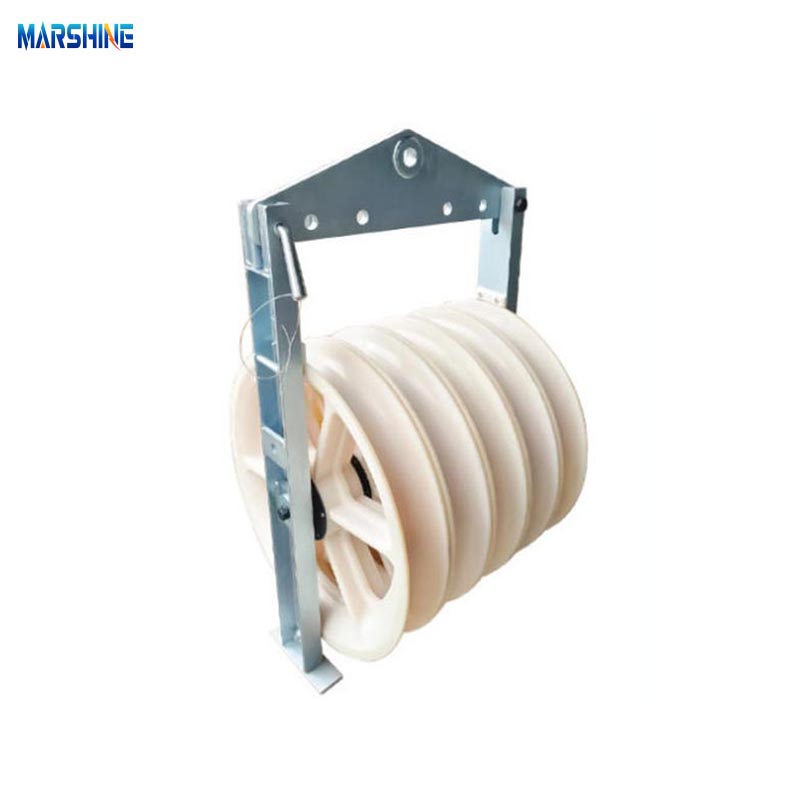
| Stringing Block | Aerial Overhead Lines | Heavy load-bearing suspension | Suspension routing with hoist attachments |
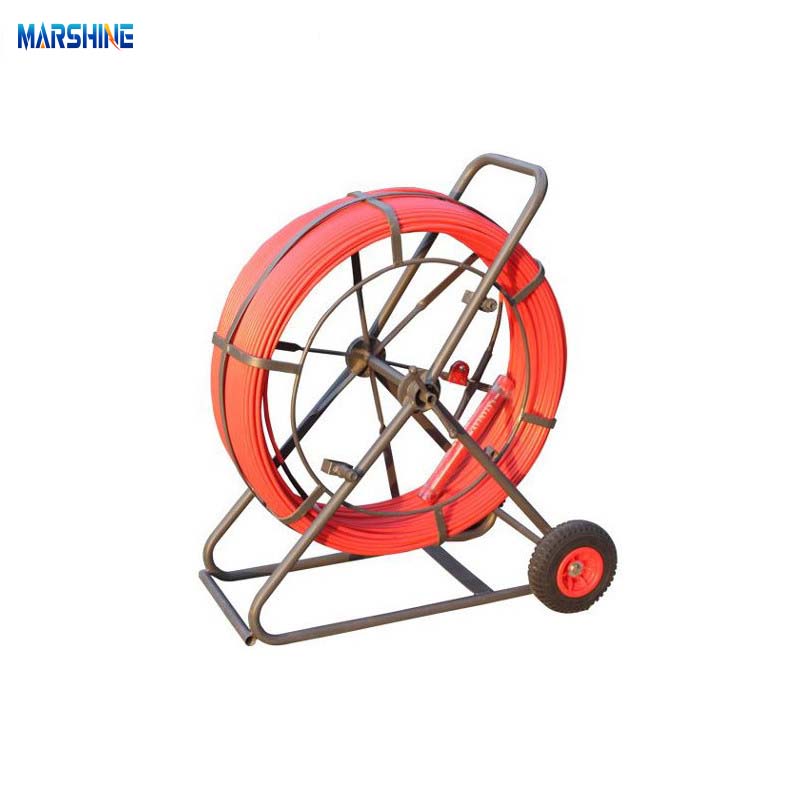
| Duct Rodder | Conduit push/pull prep | Non-load-bearing | High tensile flexibility for tight pipes |
As the table shows, functional roles differ significantly due to mechanical design. Guiding rollers are optimized specifically for ground-level distributed support, spreading the weight of heavy underground cables across multiple points. In contrast, stringing blocks are engineered to handle the concentrated vertical suspension weights of aerial power grid construction. Duct rodders, meanwhile, are not load-bearing support equipment; they rely on high tensile push-pull flexibility to navigate tight conduits and prepare the route for the actual pull.
Nylon Wheel Trade-Offs
One of the primary considerations when selecting cable laying equipment is whether to outfit rollers with nylon or aluminum wheels. Nylon wheels are lightweight and highly forgiving on delicate jackets. Jacket hardness concerns are highly cable-specific; nylon is often ideal for protecting lead-sheathed, XLPE, or fiber optic lines. They naturally resist corrosion and are easy to replace.
However, there are trade-offs regarding durability under extreme stress. Rather than relying on arbitrary tension thresholds, wheel material selection should be validated against the specific cable OEM requirements, load distribution plans, and environmental exposure. Under severe tension or when routing heavily armored steel-wire cable, nylon can develop grooves or crack over time. Aluminum wheels, while slightly heavier and harder on the cable jacket, provide the rigid longevity needed for high-tension utility pulls that might otherwise degrade softer plastics. In practice, crews often use mixed setups, deploying nylon rollers for straight runs and aluminum rollers for high-tension corners.
How to Select, Inspect, and Source Guiding Rollers
Getting the right gear on site requires more than just picking a roller out of a catalog based on price. Proper selection and routine inspection ensure that the equipment performs safely and keeps cable friction within acceptable limits throughout the pull.
A major functional advantage to look for during the selection process is modularity. Many modern guiding rollers can be pinned, linked, or stacked together to form continuous, smooth bend radii for tricky trench corners, giving crews flexibility on unpredictable sites.
Selection and Setup Checklist
A solid setup checklist always starts with spacing. While illustrative examples might suggest placing a straight guiding roller every 2 to 3 meters on flat trench runs, this spacing ultimately depends on the cable's weight, terrain conditions, and the roller manufacturer's specifications. When approaching a bend, spacing must be tightened significantly to maintain the cable's minimum bending radius. It is critical to note that minimum bend radius, roller spacing, and ground clearance must always follow the cable manufacturer's strict guidelines and applicable industry standards (e.g., IEEE, IEC, or national electrical codes), rather than relying on generalized estimates like 15 to 20 times the outer diameter.
Before initiating the pull, crews must inspect every roller on the route.
Further reading:
Key Takeaways
- Use guiding rollers to keep heavy cable off abrasive ground and reduce pulling tension during trench, duct bank, and utility installations.
- Select roller geometry by route: straight-line rollers for long runs, corner rollers for 90-degree bends, and elevated or manhole rollers for duct and vault entries.
- Check OEM load ratings before deployment, as illustrative straight-line roller capacities can range from 500 kg to 2,000 kg depending on the model.
- Match roller wheel diameter to the cable outer diameter, with many field units using 130 mm to 200 mm wheels to help avoid micro-bending.
- Choose rollers with stable steel frames and sealed precision bearings for reliable operation in muddy, dusty, and high-load job-site conditions.
Frequently Asked Questions
What does a guiding roller do in cable pulling?
A guiding roller supports and routes cable during installation, keeping it off abrasive ground and reducing friction. This helps protect the cable jacket, lowers pulling tension, and keeps the run aligned through trenches, duct banks, manholes, or corners.
When should cable crews use guiding rollers?
Use guiding rollers on long trench runs, duct entries, corner pulls, manhole approaches, and any route where cable may rub against soil, concrete, duct edges, or other abrasive surfaces.
How do guiding rollers reduce cable damage?
Guiding rollers use rotating wheels and bearings to let the cable move smoothly instead of dragging across rough surfaces. This reduces jacket abrasion, limits bending stress, and helps prevent excessive pulling force.
What load capacity should a guiding roller have?
Load capacity depends on cable weight, route geometry, and pulling tension. Some straight-line rollers are rated from about 500 kg to 2,000 kg, but crews should always confirm the correct rating in OEM documentation and project specifications.
Are guiding rollers the same as cable winches or tensioners?
No. Cable winches and tensioners generate or control pulling force, while guiding rollers manage cable routing and friction. They do not grip or pull the cable; they support and guide it during movement.