

Stringing a transmission conductor beside an energized circuit can create a risk crews may not see until it is too late: induced voltage. Under certain proximity, load, and weather conditions, an otherwise unenergized wire can accumulate hazardous electrical energy, threatening personnel, cable winches, pullers, and nearby equipment. Earthing stringing blocks are designed to reduce that risk by maintaining continuous grounding contact as the conductor moves through the sheave. This article explains how they work, where they fit in a safe stringing plan, which specifications matter, and why they should be viewed as a supplementary control—not a substitute for isolation, PPE, and disciplined transmission-line safety procedures.
Why Earthing Stringing Blocks Reduce Transmission Line Risk
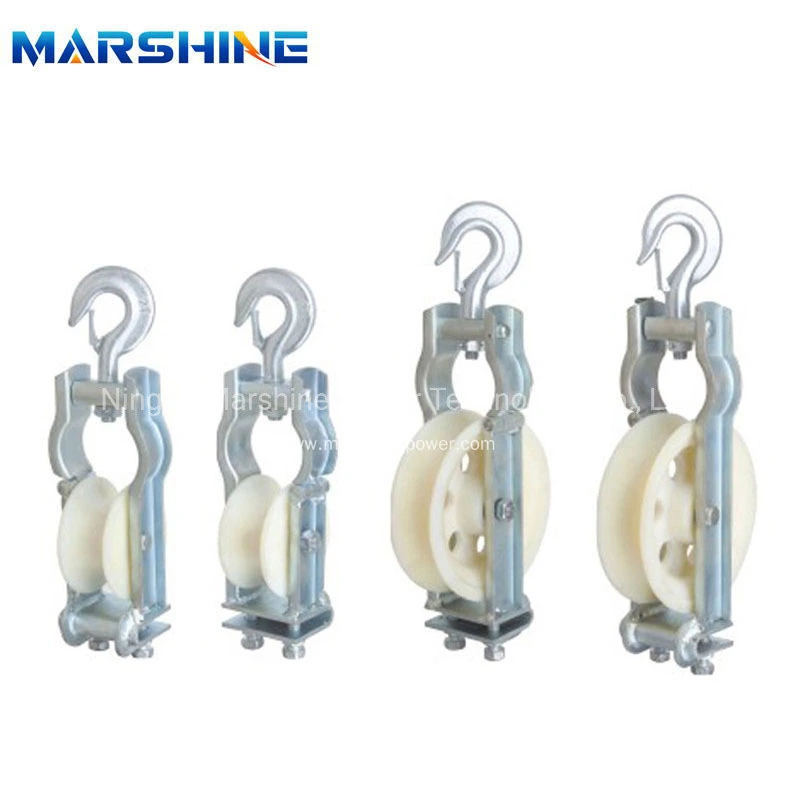
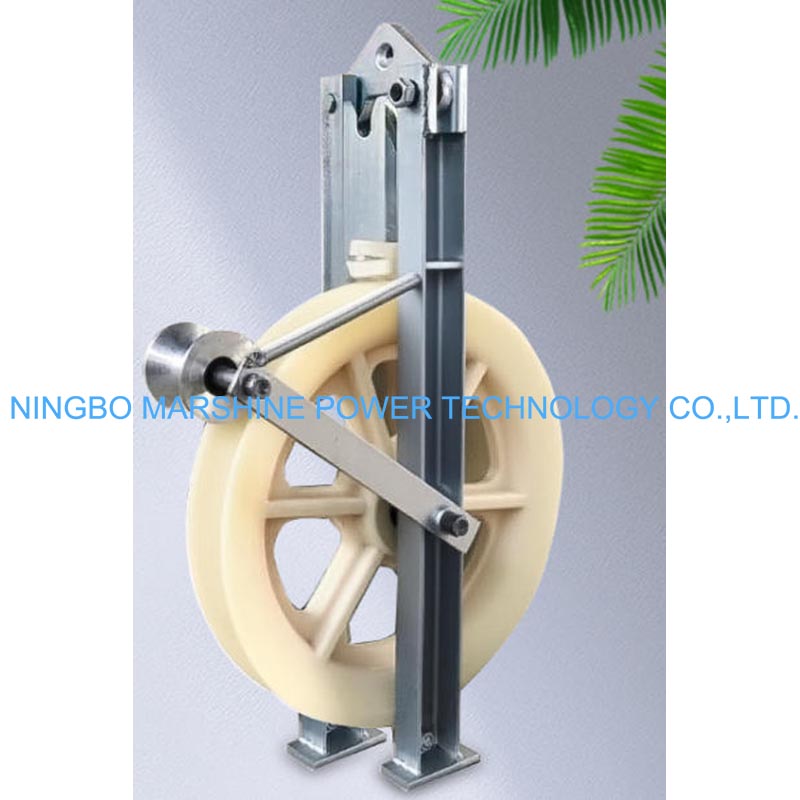
Stringing overhead transmission lines is inherently dangerous, but running new conductors parallel to energized lines introduces a hidden threat: induction. Without the right equipment, crews face serious shock hazards. This is where an earthing stringing block steps in. Unlike standard pulleys, these specialized blocks feature integrated grounding brushes and robust aluminum wheels that actively bleed off dangerous electrical charges. By maintaining continuous electrical contact with the moving conductor, they protect both the pulling equipment and the personnel on the ground. However, it is critical to note that these blocks protect against induced voltage, not direct contact with energized lines. They serve strictly as a supplementary safety measure and never replace primary controls like complete de-energization, isolation, personal protective equipment (PPE), or safe work distances.
How They Control Induced Voltage
When stringing a new line next to an active high-voltage circuit, electrostatic and electromagnetic coupling generates significant induced voltages. For illustrative purposes, this can exceed 10 kV on the unenergized wire under specific proximity and weather conditions. An earthing block manages this by providing that stray energy with a safe, low-resistance path to the ground. Inside the block, spring-loaded grounding rollers or conductive brushes press firmly against the sheave or the conductor itself. As the wire moves through the block, the grounding system actively pulls voltage spikes down to safe, manageable levels. In accordance with standards like IEEE 524-2019, the goal is to keep the touch voltage well below safety thresholds, illustratively 50V, ensuring compliance with local regulatory requirements.
Key Safety Specifications to Confirm
Contractors cannot simply select any block and assume it will handle extreme electrical events. Safety specifications dictate exactly what specialized stringing equipment can endure before failing. When reviewing specs, pay close attention to the short-circuit current rating. While earthing blocks primarily manage continuous induced voltage, they must also survive sudden, massive fault currents in the event of accidental line energization or a transferred fault. For example, a high-quality block must comfortably handle an illustrative fault current of 10 kA for 1 second without welding the bearings or melting the grounding brushes. Verifying that the equipment has undergone rigorous factory testing to safely handle these extreme electrical and mechanical stresses is essential for field safety.
How to Compare Earthing and Standard Stringing Blocks
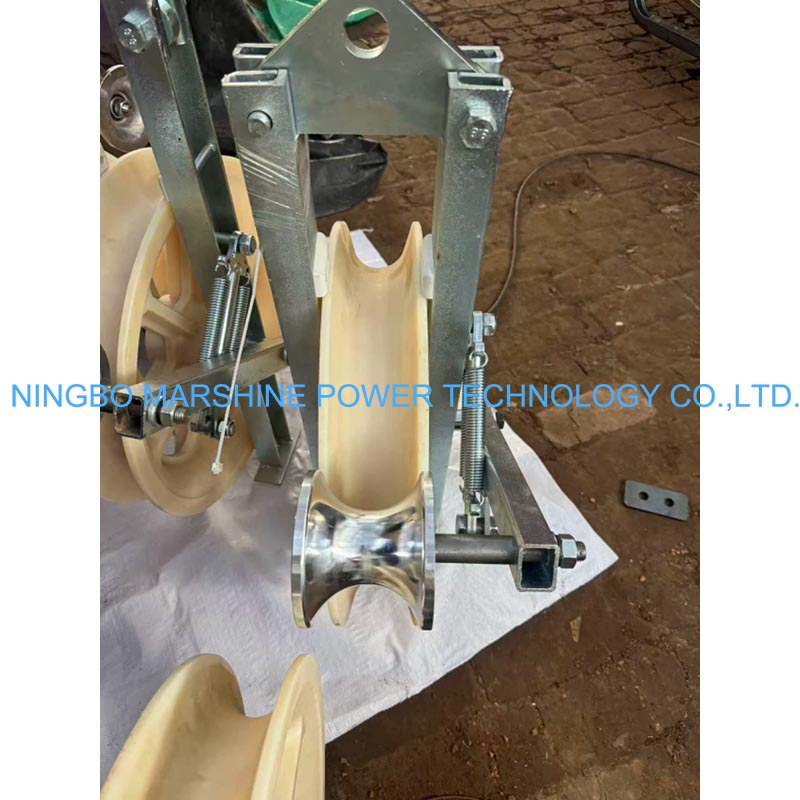
At first glance, standard and earthing blocks look quite similar, but their internal engineering serves completely different operational goals. Standard blocks are designed purely for mechanical efficiency—guiding the wire with minimal friction. Earthing blocks, however, are hybrid devices. They must balance the mechanical demands of pulling massive conductors with the electrical necessity of continuous grounding. This dual-purpose design means earthing blocks feature specialized conductive bearings and grounding attachments, which add an illustrative 15% to 20% to the overall weight of the unit compared to standard models.
Critical Comparison Points
To truly understand the operational differences, it helps to look at how these tools stack up across a few critical performance categories.
| Feature/Metric | Standard Stringing Block | Earthing Stringing Block |
|---|---|---|
| Primary Function | Mechanical wire guidance | Mechanical guidance + voltage mitigation |
| Wheel Material | Nylon or basic aluminum | High-conductivity aluminum alloy |
| Grounding Path | None | Integrated brushes/rollers to earth |
| Average Cost Premium | Baseline | Illustrative 30% to 50% premium |
| Maintenance Needs | Bearing lubrication, visual checks | Bearing lube + brush wear inspections |
Comparing these points makes it clear that while earthing blocks require a higher initial investment and slightly more maintenance, the safety payoff during parallel line construction is non-negotiable.
When Material and Ratings Affect Selection
Selected materials directly impact both the load capacity and the grounding efficiency of the block. Standard blocks utilize nylon wheels to reduce weight and protect the conductor from scratching. However, when needing to bleed off induced voltage, crews must rely on an earthing wheel forged from high-strength aluminum alloy. Aluminum provides the necessary electrical conductivity while maintaining structural integrity under heavy tension. Load ratings must be specified carefully based on conductor size and span length; an illustrative transmission project requires blocks rated between 30 kN and 80 kN. Choosing the wrong material or under-sizing the load rating compromises both the grounding path and the safety of the rigging setup.
How Contractors Should Specify and Source Earthing Stringing Blocks
Sourcing the right grounding equipment requires more than just picking a part number out of a catalog. Contractors need to align specific project risks with the manufacturer's capabilities. Because earthing blocks are critical life-safety devices, contractors require suppliers who understand the rigorous demands of power grid construction. Seek equipment that accommodates specific conductor profiles—commonly ranging from 20mm to 40mm in diameter for large transmission jobs. Furthermore, the effectiveness of any earthing block depends entirely on the proper installation and maintenance of the entire temporary earth grid it connects to.
Pre-Job Risk Review Steps
Before issuing a purchase order, project management teams must conduct a thorough risk review of the stringing operation. Calculate the expected line tension, map out the terrain, and model the anticipated induction levels from adjacent live lines. Once baseline risks are known, teams can specify the exact grounding requirements. For instance, field crews must ensure that the entire grounding circuit—from the block's brush through the temporary ground rod—maintains a low resistance. Standards such as IEEE 524-2019 and IEC 61481 dictate keeping this resistance below 10 ohms. Confirming these parameters in advance dictates whether the project requires standard grounding rollers or heavy-duty configurations for extreme induction environments.
How to Evaluate Suppliers
Evaluating a supplier comes down to their track record, testing capabilities, and commitment to verifiable quality control. Look for companies that provide concrete vetting criteria: factory testing capabilities, calibration certificates, field trial data, and clear warranty terms. Manufacturers should operate under strict quality control standards, such as GB/T19001-2008 or ISO 9001 certification. When reviewing options like [MARSHINE](https://www.cable-winch.
Further reading:
Key Takeaways
- Use earthing stringing blocks when pulling conductors parallel to energized circuits because induced voltage can become a serious shock hazard.
- Confirm that the block provides continuous electrical contact through grounding brushes, rollers, or conductive components before field deployment.
- Do not treat an earthing stringing block as primary protection; de-energization, isolation, PPE, and safe work distances remain essential controls.
- Review short-circuit current ratings, such as a tested 10 kA for 1 second capability where applicable, before selecting equipment for high-risk sites.
- Compare earthing and standard stringing blocks carefully because earthing models add electrical grounding functions beyond basic mechanical conductor guidance.
Frequently Asked Questions
What is an earthing stringing block used for?
An earthing stringing block is used during overhead conductor stringing to provide a controlled path to ground for induced voltage, helping reduce shock risk for crews and protect pulling equipment.
Does an earthing stringing block make work near live lines safe?
No. It helps control induced voltage only. It does not protect against direct contact with energized conductors and must be used with de-energization, isolation, PPE, safe distances, and approved work procedures.
How is an earthing block different from a standard stringing block?
A standard block mainly guides the conductor mechanically. An earthing block adds grounding brushes, rollers, or conductive components that maintain electrical contact with the moving conductor and dissipate induced charge.
What specifications should contractors check before use?
Check the rated conductor size, working load limit, grounding method, short-circuit current rating, factory test reports, and compatibility with the pulling setup used on site.
Why is induced voltage dangerous during line stringing?
A new conductor installed near energized circuits can pick up voltage through electrostatic and electromagnetic coupling. In some conditions, this induced voltage can be high enough to create serious shock hazards.