

Introduction
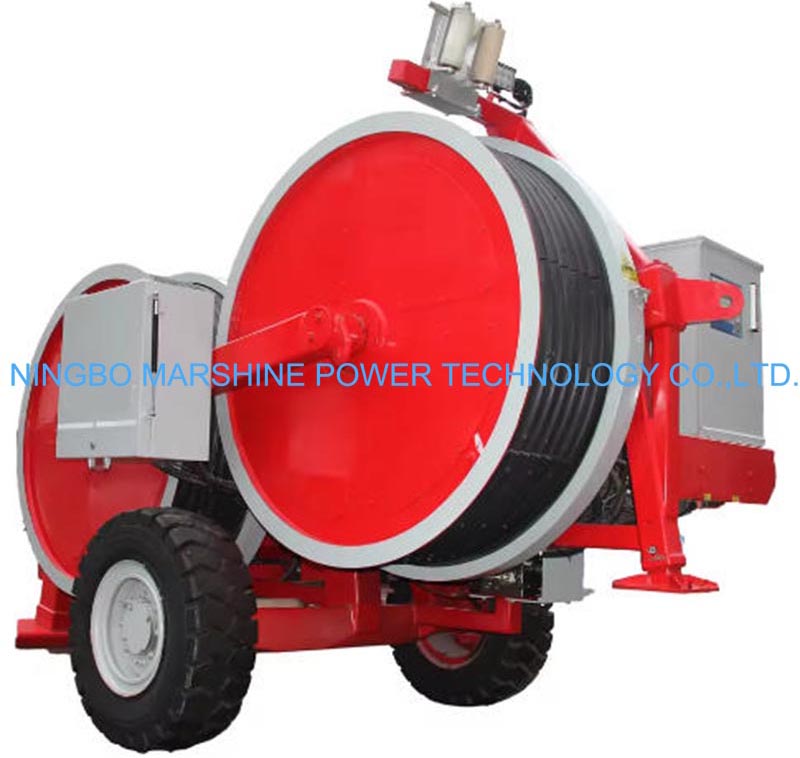
Choosing a conductor stringing tension machine is less about raw pulling power than about how consistently it protects expensive cable during installation. In transmission, distribution, and OPGW work, reliable tension control helps prevent conductor damage, reduces downtime, and keeps crews working safely across long spans and difficult terrain. The most dependable machines combine stable braking, precise tension regulation, durable hydraulic systems, and operator-friendly controls that hold performance under changing loads. The following discussion explains which design features, operating capabilities, and build qualities determine whether a machine will deliver accurate, repeatable results in real field conditions.
Why a Reliable Conductor Stringing Tension Machine Matters
Building a modern power grid is no small feat, and getting the lines up without a hitch requires serious hardware. At the heart of this operation is the conductor stringing tension machine. These workhorses keep conductors, earth wires, and optical cables perfectly taut during installation, preventing them from dragging on the ground, scraping against rugged terrain, or snagging on unexpected obstacles. When crews pull kilometers of expensive cable across valleys or through dense urban infrastructure, relying on a subpar machine is not just a minor risk—it is a fast track to damaged materials and blown project budgets.
Project impact and use cases
The ripple effect of using a high-quality cable tension control machine across a project is massive. Whether a crew is tackling an expansive aerial transmission line or laying heavy-duty underground infrastructure, keeping consistent tension prevents structural damage to the cables. For instance, when stringing Optical Ground Wire (OPGW), tension accuracy must often stay within a strict ±2% margin. Sudden spikes or drops in tension can cause unseen micro-cracks in the delicate fiber optics, leading to severe signal loss before the line even goes live.
To combat these issues, modern equipment features advanced, safe, and easy-to-handle designs. By integrating specialized aerial and underground cable tools into their workflows, crews can adapt to strict project demands without slowing down the installation pace. These features ensure the conductor maintains its structural integrity from the reel to the final pylon.
Key terms and operating context
To fully grasp what these machines do, it is essential to look closely at their operating context. Tensioners work primarily on the pay-off side of a stringing operation, applying a highly controlled braking force while a puller reels the conductor in from the other end. Depending on the scale of the job, a typical wire tensioning system might need to maintain a maximum continuous tension ranging from 40 kN for standard regional distribution lines up to a massive 200 kN for ultra-high-voltage cross-country transmission networks.
Operating continuously under these extreme loads generates immense mechanical stress and heat. Consequently, the equipment must be built to handle grueling environmental challenges—from freezing high-altitude winds to scorching desert heat—without faltering or dropping the line tension.
Technical Specifications That Define Performance
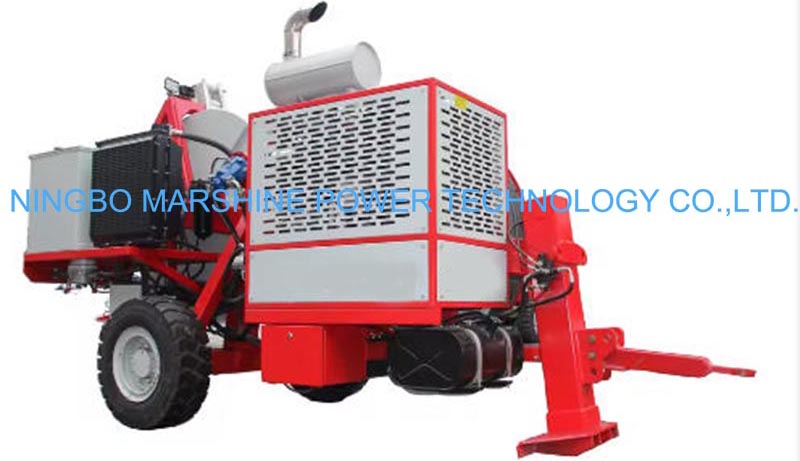
Digging into the technical side, the specifications of a tensioner directly dictate how well it will perform out in the mud and grit of the field. Evaluating performance requires looking beyond the maximum pulling force on a brochure to understand the deep integration of mechanical parts and hydraulic systems. A truly reliable machine balances raw power with incredibly precise control, ensuring the conductor glides smoothly and safely off the reel.
Mechanical, hydraulic, and control features
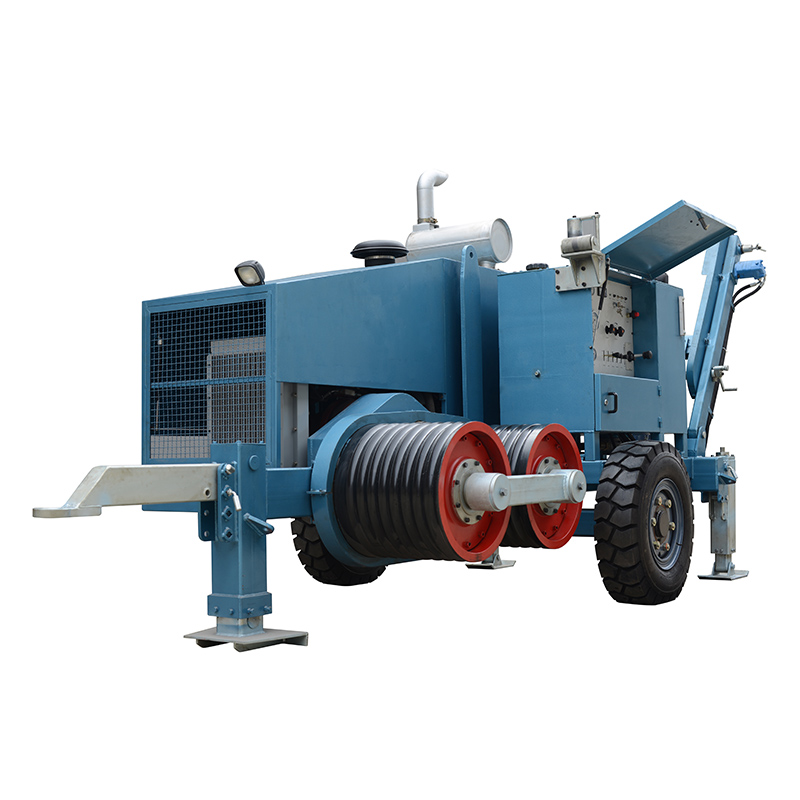
The real magic happens in the seamless interplay between mechanical, hydraulic, and control features. High-performance tensioners utilize large-diameter bull-wheels—often measuring around 1500 mm to 1800 mm for heavy-duty applications. These wheels are typically lined with wear-resistant nylon or aluminum segments designed specifically for pay-off pulleys. These grooved segments are essential because they grip the cable firmly while protecting the conductor's outer aluminum layer from severe abrasion.
Behind these wheels, closed-loop hydraulic braking systems provide stepless tension control. This allows operators to dial in the exact resistance needed, preventing conductor galloping and ensuring a smooth pull.
| Tensioner Class | Max Continuous Tension (kN) | Bull-wheel Diameter (mm) | Max Stringing Speed (km/h) | Typical Application |
|---|---|---|---|---|
| Light-Duty | 30 - 40 | 1000 - 1200 | 5.0 | Distribution lines, OPGW |
| Medium-Duty | 70 - 90 | 1300 - 1500 | 4.0 | 110kV - 220kV transmission |
| Heavy-Duty | 140 - 200 | 1500 - 1800 | 3.0 | 500kV+ ultra-high-voltage |
Design trade-offs and reliability factors
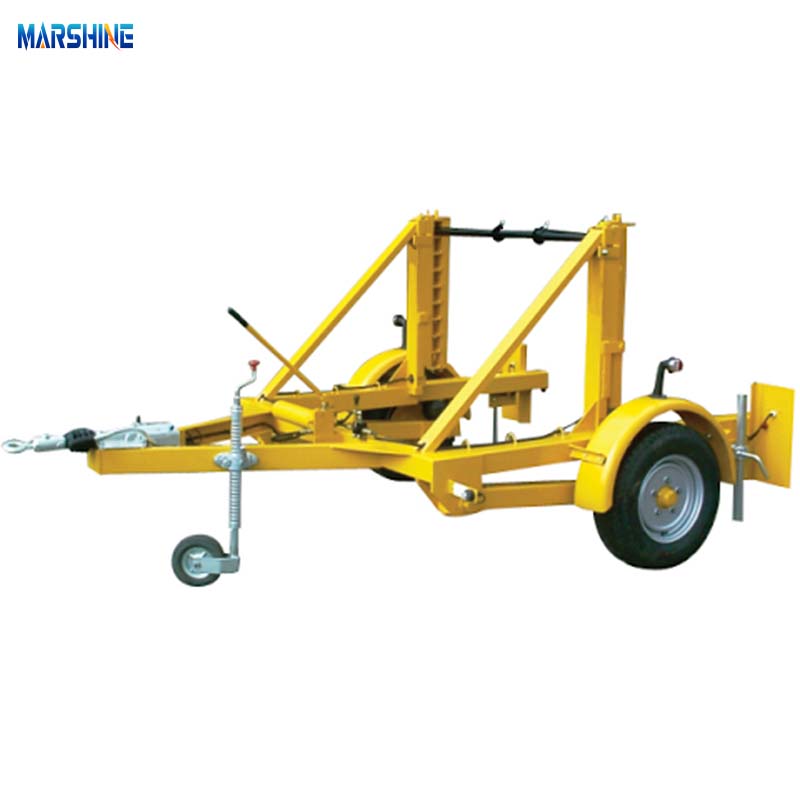
Designing these complex machines involves critical trade-offs between job site portability and raw pulling capacity. Heavier rigs naturally offer more stability and higher tension limits, but they are significantly tougher to transport to remote, mountainous project sites using a standard cable drum trailer. Manufacturers must strike a balance to keep the equipment maneuverable.
Reliability also hinges heavily on thermal management. A top-tier tension machine must keep its internal hydraulic oil temperatures below 80°C during continuous, hours-long stringing operations. If the oil gets hotter, it degrades, leading to a dangerous loss of braking pressure. The best equipment addresses this by integrating high-efficiency heat exchangers and prioritizing safe, user-friendly layouts that make field maintenance straightforward and fast.
How to Choose the Right Supplier
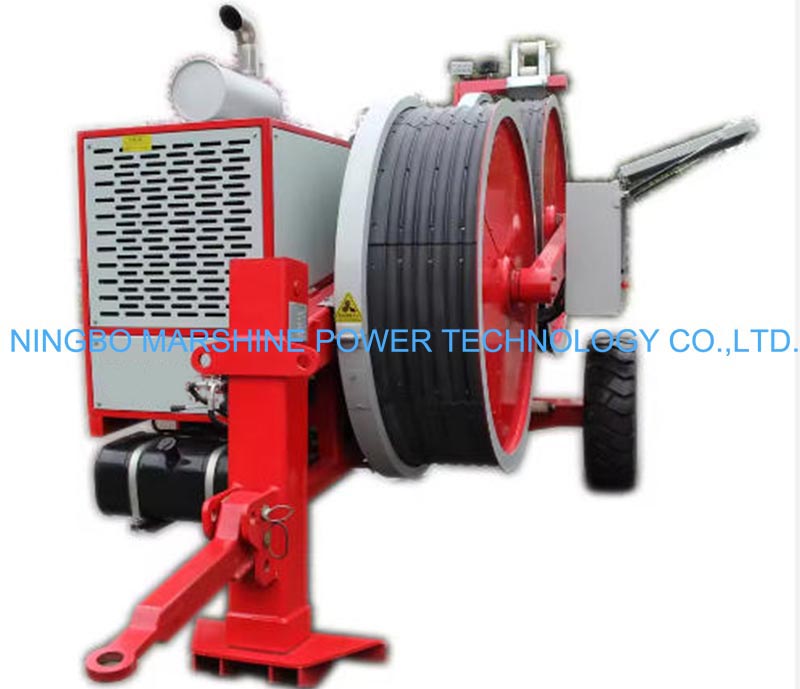
Knowing what makes a great tensioner tick is only half the battle; the other half is finding a manufacturer that can deliver it consistently. The global power equipment industry is packed with options, but sourcing reliable circuitry construction tools requires looking far beyond a basic spec sheet. An ideal industry partner is one whose entire management philosophy revolves around long-term quality, rigorous testing, and ultimate customer satisfaction.
Compliance, service, and support criteria
When vetting potential suppliers, strict compliance and robust support systems are absolute non-negotiables. Look for manufacturers that have successfully passed recognized quality system certifications, such as the GB/T19001-2008 standard. This guarantees a dependable baseline of manufacturing consistency across their entire product line.
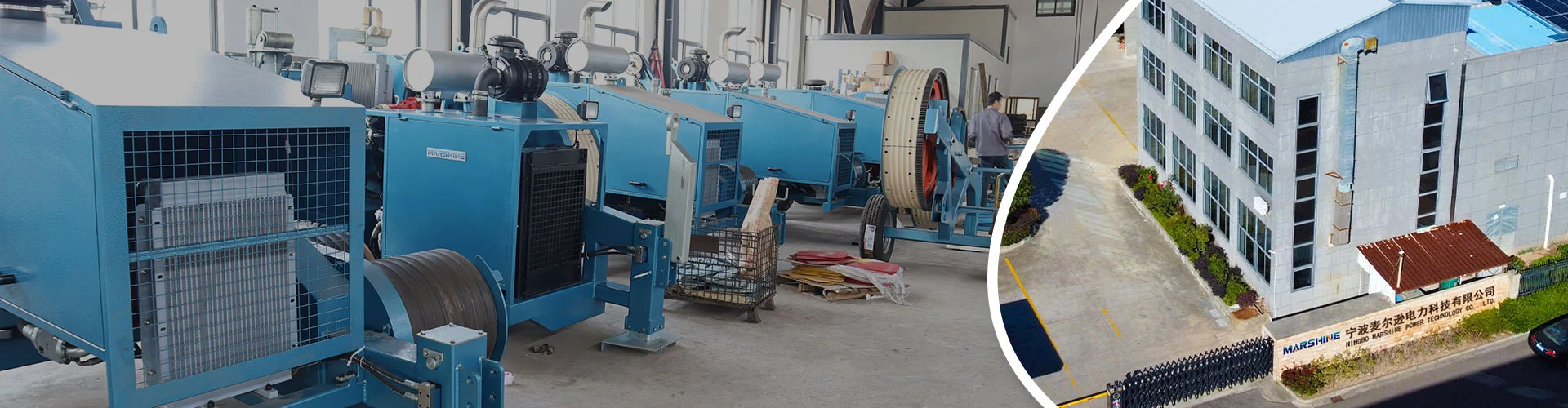
A reputable company like MARSHINE operates on the philosophy of being science and technology-oriented while prioritizing user demand. They do not just ship a machine and forget about it; they provide comprehensive after-sales systems, dedicated quality tracking, and active service monitoring. In the high-stakes power grid construction industry, targeting a defect rate of under 1% and offering rapid spare parts availability can mean the difference between a project finishing on schedule or facing weeks of incredibly costly downtime.
Final selection framework
A solid final selection framework evaluates both the breadth of a supplier's catalog and their proven commitment to innovation.
Further reading:
Key Takeaways
- The most important conclusions and rationale for conductor stringing tension machine
- Specs, compliance, and risk checks worth validating before you commit
- Practical next steps and caveats readers can apply immediately
Frequently Asked Questions
What tension accuracy should a reliable conductor stringing tension machine provide?
For sensitive work like OPGW, aim for tension control within about ±2% to avoid fiber damage and signal loss.
Why is a closed-loop hydraulic braking system important?
It delivers stepless, stable tension control, reducing spikes, conductor galloping, and uneven pay-off during long pulls.
How do bull-wheel size and lining affect performance?
Larger bull-wheels with nylon or aluminum-lined grooves improve grip while reducing abrasion on the conductor’s outer layer.
What tension range should I choose for my project?
Match the machine to line class: about 30–40 kN for distribution, 70–90 kN for 110–220 kV, and 140–200 kN for 500 kV+ jobs.
Where can I compare conductor stringing tension machines and related tools?
You can review hydraulic cable tensioners, pullers, and matching stringing equipment at cable-winch.com to compare project-fit options.