

Cable damage during installation is often caused less by the pulling force itself than by where that force is concentrated. In trenches, manholes, and conduit entries, a cable can scrape, flatten, or over-bend in seconds if it is allowed to drag across hard edges. A well-selected cable guide pulley gives crews a controlled rolling path, lowering friction while helping maintain the cable’s required bend radius. This article explains how pulley size, groove geometry, bearings, and placement affect cable safety, especially in underground electrical and fiber-optic work. It also highlights a practical reality: pulleys reduce risk, but they must be matched, maintained, and used with tension control and lubrication.
How Cable Guide Pulleys Reduce Pulling Damage
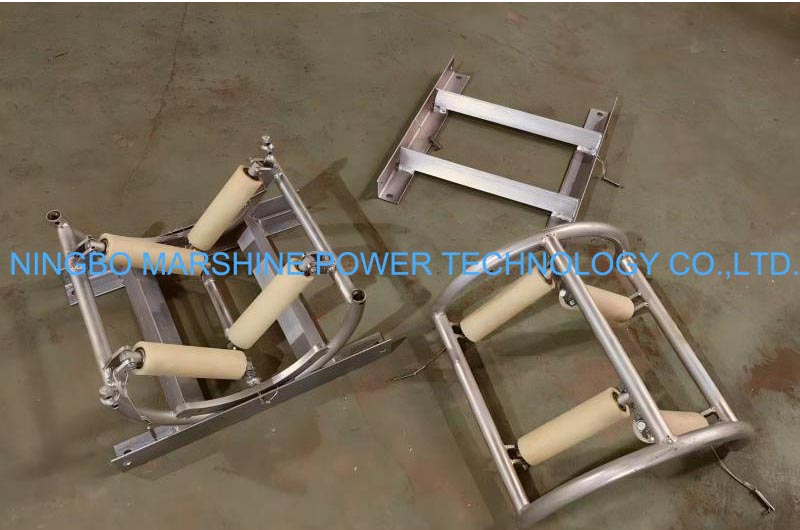
When pulling heavy electrical or optical fiber cables through trenches or conduits, friction and sharp bends are the biggest threats to the cable jacket and internal conductors. A high-quality Cable Guide Pulley acts as a buffer, ensuring the line glides smoothly while maintaining its structural integrity.
Key Specs That Control Cable Bending Stress
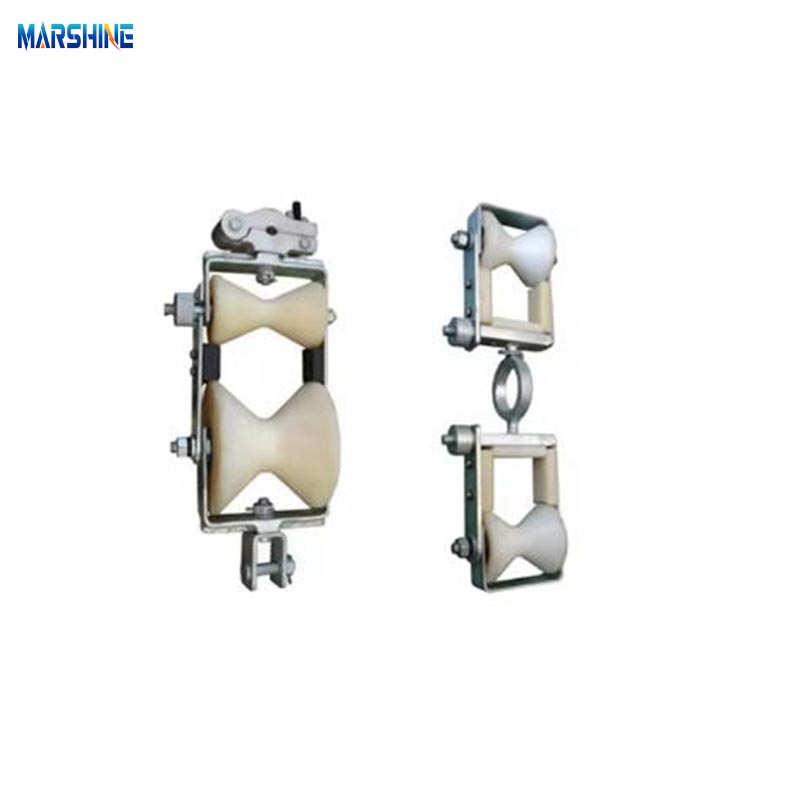
To prevent micro-bending in sensitive fiber optics or insulation tears in heavy power cables, installation teams must match the pulley's specifications to the cable's minimum bending radius. High-tech Cable Feeding Guides are explicitly designed to distribute pulling tension evenly across the arc of the bend rather than letting it concentrate on a single pressure point.
Industry manufacturers like MARSHINE, operating under the strict GB/T19001-2008 quality certification system, engineer these tools with precise load ratings and advanced materials. By utilizing heavy-duty nylon or cast aluminum wheels, these pulleys handle massive side-wall pressure without warping. Driven by a "quality first, users first" philosophy, these tools are built to be safe, easy to handle, and highly effective at preventing the stress concentrations that cause permanent jacket deformation.
Effects of Roller Diameter, Groove Radius, and Bearings
The physical dimensions and internal components of a Cable Feeding Roller dictate exactly how well it protects the line during a complex pull:
- Roller Diameter: A larger wheel diameter creates a much gentler sweep. This feature is critical for thick transmission cables that simply cannot tolerate sharp, abrupt angles without sustaining internal core damage.
- Groove Radius: A properly sized, contoured groove deeply cradles the cable. This keeps the line perfectly centered, preventing it from flattening out under high tension or jumping off the wheel and scraping against the metal frame.
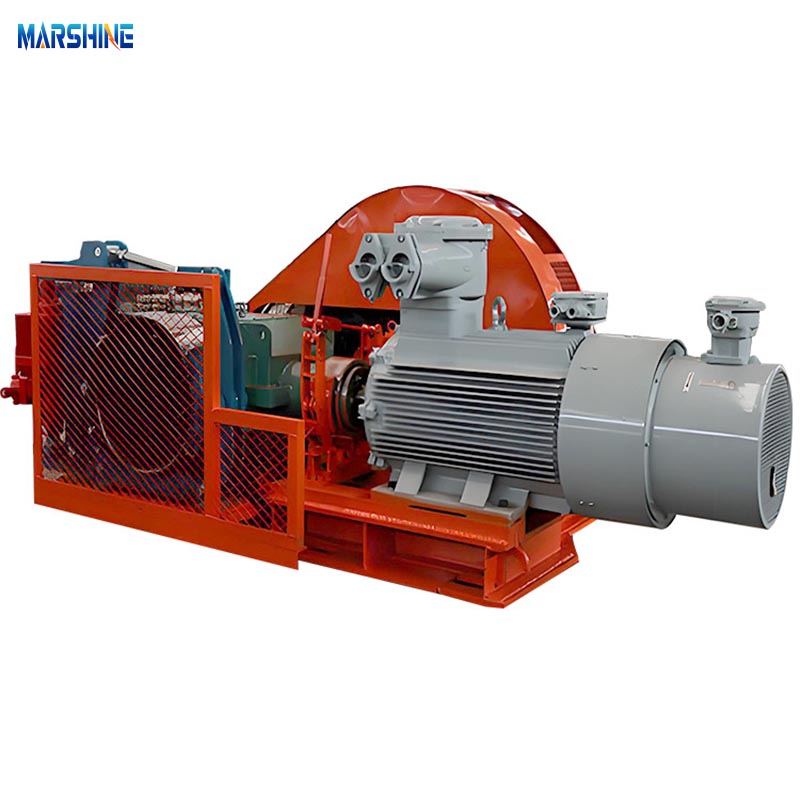
- Precision Bearings: High-quality, sealed ball bearings drastically reduce rolling resistance. By allowing the wheel to spin freely under heavy loads, smooth bearings lower the overall pulling force required from the cable winch, which directly minimizes the longitudinal strain placed on the cable itself.
Further reading:
Cable Guide Pulley Design Choices for Underground Pulling
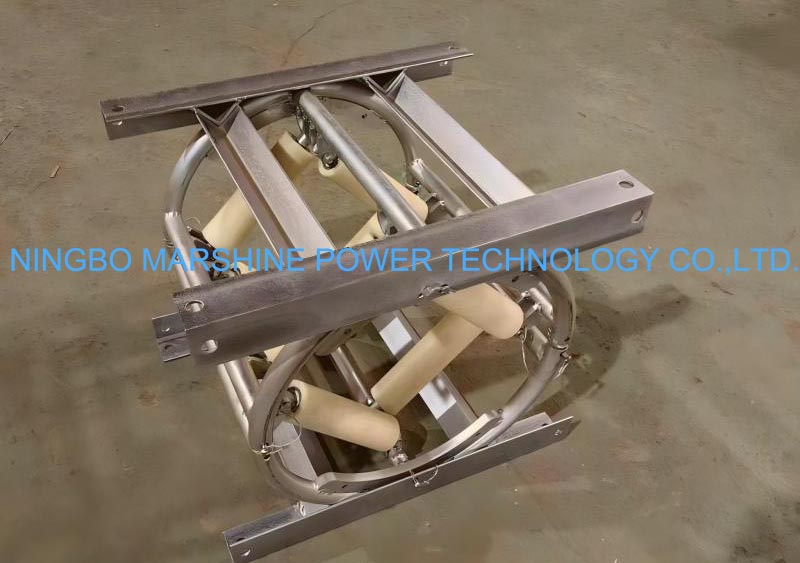
Underground environments expose equipment to harsh conditions, including abrasive mud and tight, flooded trenches. Choosing the right cable guide pulley design for these applications requires evaluating wheel materials, bearing seals, and frame construction compatibility with soil chemistry and confined-space dimensions. The standout features of modern pulleys include heavy-duty weather-resistant coatings and modular frames that can be pinned together to match the exact curvature of the trench. These design choices ensure that the pulleys remain stable in loose soil and continue spinning freely even when submerged in muddy water.
Comparing Nylon Wheels, Aluminum Wheels, and Frame Materials
Crews generally choose between two main wheel materials depending on the job's specific demands. Manufacturers produce both nylon wheels and aluminum wheels for cable guide pulleys, allowing operators to match the tool to the task. Selecting the appropriate material requires evaluating frame compatibility with the trench environment and ensuring the wheel material will not cause chemical degradation of specific cable jacket compounds. It is also crucial to consider environmental factors: nylon wheels can absorb moisture and swell in flooded trenches, while aluminum wheels may be susceptible to galvanic corrosion in highly acidic or alkaline soils.
| Wheel Material | Typical Load Limit* | Weight Profile | Best Application Profile | Jacket Compatibility |
|---|---|---|---|---|
| High-Density Nylon | Up to 800 kg | Lightweight & Maneuverable | Delicate fiber optics, standard telecom jackets, anti-corrosion needs | Safe for PVC, XLPE, and LSZH compounds |
| Cast Aluminum | Up to 2,500 kg | Medium-Heavy & Rigid | Heavy-duty power cables, highly abrasive trench environments | High heat tolerance; monitor friction on softer PVC/LSZH |
*Note: Load limits are manufacturer-specific examples and vary by model.
Nylon wheels offer a softer touch that protects delicate outer jackets and resists chemical corrosion, while aluminum wheels deliver the strength and heat dissipation needed for heavy industrial power lines.
Parameters to Check Before Field Use
Before placing a cable guide pulley into the trench, crews must verify several operational parameters on-site. First, perform functional pre-pull checks: ensure that the bearings spin freely without grinding, verify that the groove radius matches the cable's outer diameter, and confirm that adjacent pulleys are perfectly aligned to prevent the cable from derailing. Next, check the physical condition of the frame. A common standard for heavy underground pulls is a galvanized steel tube frame with a 5mm to 6mm wall thickness, which must be inspected for warping or damage that could fail under severe lateral loads. Operators must also confirm trench width compatibility and ensure the pulley's base footprint is wide enough to resist tipping when side-loaded by a wandering cable. High-quality pulleys feature anti-slip base plates and anchor holes, allowing crews to stake them securely into the trench floor. These robust jobsite setup parameters ensure the unit remains securely anchored in unstable soil, keeping the entire pull safely aligned and preventing jacket abrasion from collapsed frames.
How to Specify, Source, and Maintain Cable Guide Pulleys
Procuring the right cable guide pulley requires more than selecting the lowest-priced option. Buyers must specify equipment that matches exact operational parameters and source it from manufacturers who provide actionable selection criteria, such as frame material compatibility with confined-space dimensions. High-quality pulleys feature robust frame designs that keep lifecycle costs low and crew safety high.
Key Takeaways
- Use cable guide pulleys to keep cables elevated from abrasive trench edges, concrete, and conduit mouths during heavy pulls.
- Confirm the cable manufacturer’s minimum bending radius before setup, since high-voltage cables may require 15 to 20 times the outside diameter.
- Select roller diameters around 140mm to 200mm for many underground distribution pulls to reduce localized compression and jacket stress.
- Choose pulleys with correctly sized groove radii and sealed ball bearings to keep the cable centered and lower dynamic pulling friction.
- Inspect pulleys before every pull because seized bearings, damaged frames, or worn grooves can turn protective equipment into a source of cable damage.
- Continue monitoring pulling tension, applying lubricant, and calibrating the winch even when a pulley system is properly installed.
Frequently Asked Questions
What does a cable guide pulley do during a pull?
It supports and redirects the cable so it does not drag across trench edges, concrete, conduit mouths, or manhole surfaces. This reduces jacket abrasion, bending stress, and pulling resistance.
Is a cable guide pulley the same as a stringing block?
In many field applications, yes. A cable guide pulley may also be called a stringing block, cable feeding guide, trench roller, or underground cable roller depending on the job and equipment style.
How does roller diameter affect cable protection?
Larger rollers, often around 140mm to 200mm for standard underground distribution work, spread pressure over more surface area. This helps reduce localized jacket stress, sidewall crushing, and friction.
Can a pulley damage cable if used incorrectly?
Yes. Seized bearings, sharp grooves, poor alignment, undersized radii, or a collapsed frame can scrape the jacket, create flat spots, or force the cable below its minimum bending radius.
How do I choose the right pulley groove radius?
Match the groove to the cable outside diameter and pulling path. The cable should sit securely without pinching, jumping the roller, or bending tighter than the manufacturer’s minimum bending radius.