

Introduction
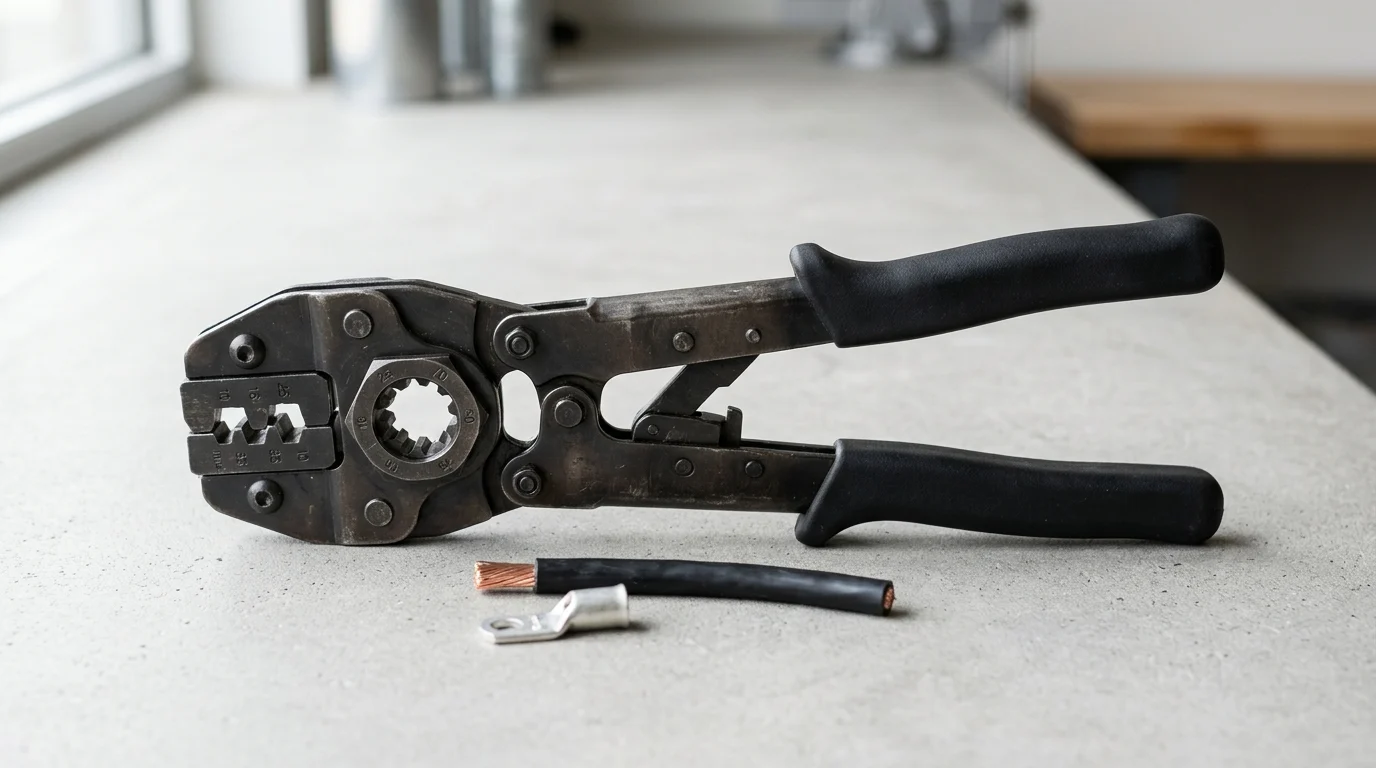
For heavy-duty field work, the best manual cable lug crimper is the one that delivers consistent compression, survives rough conditions, and remains practical when power-assisted tools are not an option. This article compares what actually matters on the job: crimping force, die range, handle leverage, tool durability, portability, and reliability in cold, heat, dust, and remote locations. You will see how different manual crimper designs perform for large-gauge cable terminations, where common failure points appear, and which features make a real difference for line crews, solar installers, and maintenance teams working far from the shop.
Why choosing the right manual cable lug crimper matters
When field crews head out to repair a downed power line or wire up an off-grid solar installation, a reliable manual cable lug crimper is easily one of the most critical items in the toolkit. A poor crimp does not just look sloppy; it creates high electrical resistance, leading to voltage drops, localized heating, and potentially catastrophic electrical fires. Heavy-duty field work demands tools that do not rely on battery packs or hydraulic pumps that can easily fail in harsh outdoor conditions.
Key use cases and performance needs
The primary use cases for these tools involve environments where portability and ruggedness are non-negotiable. Whether technicians are working in underground vaults, performing aerial cable maintenance, or doing substation repairs, they need a tool that functions flawlessly without an external power source. Field conditions can be brutal, with temperatures swinging from -20°C in the dead of winter to over 50°C in direct summer sunlight. High-quality crimpers are built to withstand these extremes without the metal becoming brittle or the ratcheting mechanisms jamming.
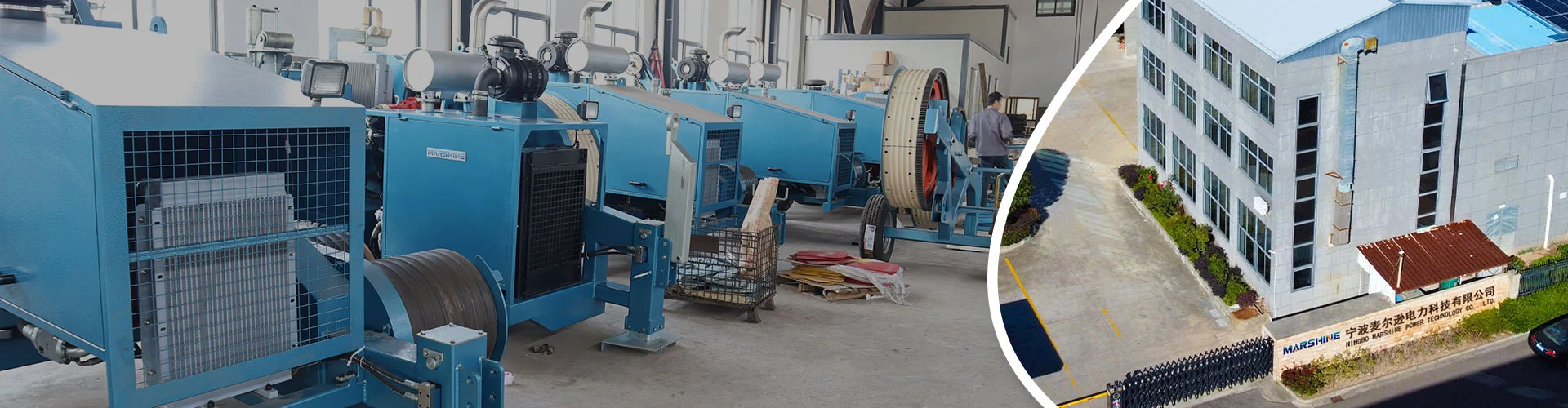
Manufacturers like Ningbo Marshine Power Technology Co., Ltd. specialize in developing circuitry construction tools tailored for these exact scenarios. Their focus on advanced, safe, and easy-to-handle products ensures that aerial and underground cable tools can handle the daily abuse of professional grid construction and operation.
Core specifications that affect results
Core specifications dictate whether a tool is truly up to the task. A standard heavy-duty hand operated crimping tool typically needs to accommodate a broad wire range, often spanning from 8 AWG up to 4/0 AWG, or even 250 MCM for larger utility applications. The crimping force is another vital metric; manual tools rely entirely on mechanical advantage to generate anywhere from 6 to 12 tons of applied force.
If the tool's leverage ratio is poorly designed, operators will struggle to achieve the necessary compression, resulting in loose lugs and failed electrical inspections. The die system must also align perfectly with the lug specifications to ensure a solid, cold-welded joint that eliminates air gaps and prevents moisture ingress over the lifespan of the connection.
How to compare manual cable lug crimpers
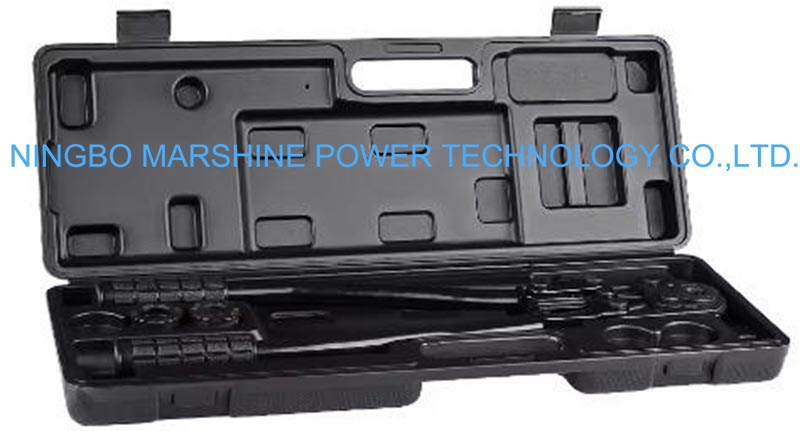
Comparing different models goes beyond just looking at the price tag. Field technicians need to evaluate the mechanical efficiency, the specific crimping profile, and the physical ergonomics of the tool. A side-by-side comparison reveals that seemingly minor design choices make a massive difference during a twelve-hour shift in the field.
Crimp force, cable range, and die system
The heart of any mechanical crimping tool is its die system and the raw force it delivers. Interchangeable hexagonal dies are the industry standard for heavy-duty applications because they apply even pressure from all sides, creating a highly conductive and mechanically sound connection. Dieless crimpers, on the other hand, use an indent profile that adjusts automatically. This saves time on the job site but might not meet strict utility codes for certain high-voltage connections.
| Crimping Profile | Typical Cable Range | Required Manual Force | Best Application |
|---|---|---|---|
| Hexagonal (Dies) | 8 AWG - 250 MCM | 8 - 12 Tons | High-voltage utility lines |
| Indent (Dieless) | 6 AWG - 4/0 AWG | 5 - 7 Tons | Rapid field repairs |
| Trapezoidal | 10 AWG - 2 AWG | 2 - 4 Tons | Control panels & grounding |
Matching the die system to the exact cable and lug material—whether copper or aluminum—is essential to prevent over-crimping, which damages the delicate wire strands, or under-crimping, which inevitably leads to dangerous pull-outs.
Handle design, durability, and ease of use
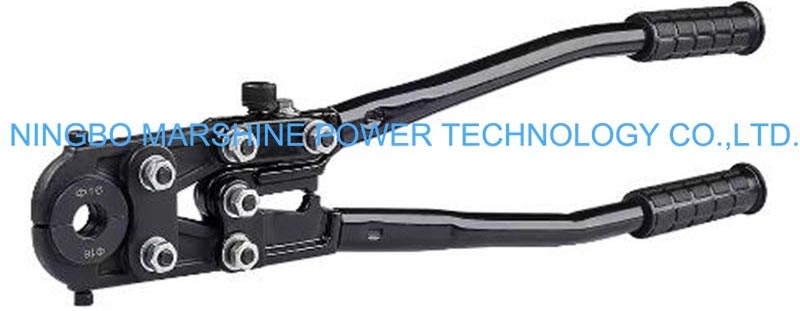
Handle design directly impacts both the tool's durability and its ease of use. To generate 8 tons of force manually, the tool needs serious leverage. Industry-standard models typically feature handles ranging from 18 to 24 inches in length. Longer handles provide better mechanical advantage, significantly reducing operator fatigue, though they can be cumbersome in tight spaces like junction boxes.
Top-tier manufacturers utilize forged steel for the crimping head to prevent warping under pressure, while opting for hardened aircraft-grade aluminum or fiberglass for the handles to keep the total tool weight under 8 lbs. Slip-resistant, ergonomic rubber grips are also a crucial feature, preventing the tool from slipping out of sweaty or grease-covered hands during critical field operations.
How buyers should choose the best option
Making the final purchasing decision requires looking at both the immediate functionality of the tool and the long-term reliability of the supplier. Buyers should focus on practical field validation and the lifecycle value of the equipment rather than just the upfront cost.
Field-use checks and inspection steps
Before committing to a fleet of new crimpers, procurement teams and field managers should conduct rigorous field-use checks. This involves test-crimping several connections and subjecting them to mechanical pull tests. For example, a properly crimped 2/0 copper lug should easily withstand over 200 lbs of pull-out resistance without yielding.
Inspectors should also look for excessive "flash"—the excess metal extruded between the dies during compression—which indicates poorly machined dies or mismatched components. A high-quality manual crimper will produce a clean, uniform compression every time. Furthermore, checking the tool's pivot points for lateral play and ensuring the die-release mechanism operates smoothly even after repeated use are standard inspection steps that reveal the true build quality.
Supplier quality, service, and lifecycle value
The ultimate value of circuitry construction tools lies in their longevity and the backing of a reputable manufacturer. A cheap crimper might survive 500 cycles before the jaws misalign, whereas professional-grade equipment is engineered to exceed 10,000 crimp cycles with minimal maintenance. This is where supplier quality and service become paramount.
For instance, MARSHINE provides comprehensive support and durable construction tools designed to maximize lifecycle value in demanding field environments.
Further reading:
Key Takeaways
- The most important conclusions and rationale for manual cable lug crimper
- Specs, compliance, and risk checks worth validating before you commit
- Practical next steps and caveats readers can apply immediately
Frequently Asked Questions
What type of manual cable lug crimper is best for heavy-duty field work?
A heavy-duty hex-die manual crimper with 8–12 tons of force is usually best. It gives consistent compression for utility, substation, and off-grid cable terminations.
What cable range should a field-ready manual cable lug crimper cover?
For most field jobs, choose a tool covering about 8 AWG to 4/0 AWG. Utility crews may need models reaching 250 MCM for larger conductors.
Are dieless crimpers a good choice for outdoor repair work?
They are useful for fast repairs because they save die changes. But for code-sensitive or high-voltage work, a hex-die crimper is usually the safer choice.
Which features matter most when buying from cable-winch.com?
Focus on crimp force, cable range, die compatibility, forged head strength, and handle length. For field crews, prioritize rugged tools that work without batteries or hydraulic pumps.
How can I reduce fatigue when using a manual cable lug crimper all day?
Pick a model with 18–24 inch handles, good grip shape, and efficient leverage. Longer handles lower hand force, especially during repeated heavy-gauge crimps.