

A cable installation project can lose hours—or create serious safety risks—when the wrong equipment is used to move heavy drums. A reel transport trailer gives crews a controlled way to load, tow, position, and in many cases pay out cable directly from the job site. But not every trailer is suited to every reel, road condition, or pulling method. Payload rating, drum diameter, hydraulic lifting, spindle braking, hitch compatibility, and local transport rules all affect performance. This guide explains how to compare trailer specifications and choose a model that supports safer handling, faster deployment, and more reliable underground or aerial cable installation.
Why Choose a Reel Transport Trailer
Moving massive cable drums across uneven job sites requires specialized equipment. A Reel Transport Trailer reduces manual lifting risks and accelerates cable deployment by streamlining material handling. This guide covers non-motorized towable trailers designed for both highway transport and on-site cable payout. While specifications vary by manufacturer, these units typically rely on high-tensile steel frames and integrated lifting systems, simplifying logistics and lowering equipment costs compared to self-propelled reel carriers.
What a Reel Transport Trailer Is
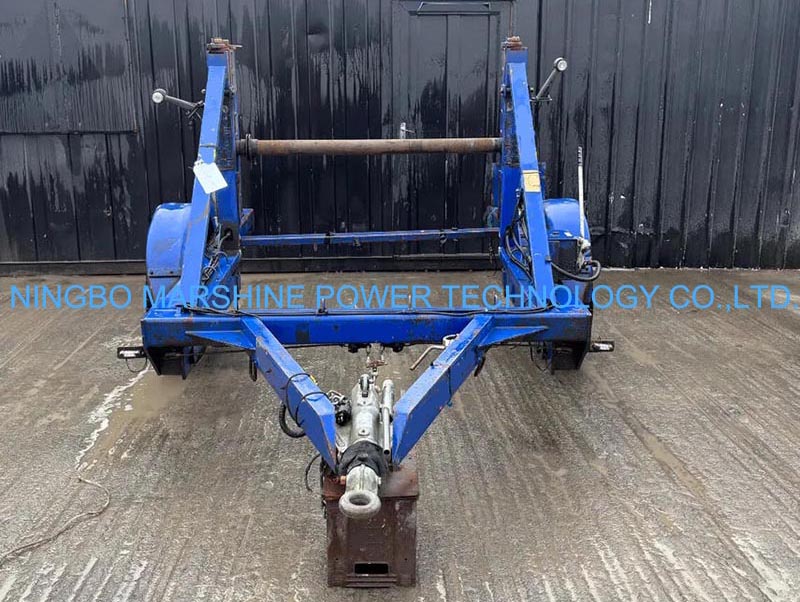
A reel transport trailer is a towable unit engineered to load, transport, and unspool large cable drums. It is important to distinguish between transport-only trailers—which are best for point-to-point delivery where on-site cranes unload the drum—and dual-purpose payout models. Payout models are ideal for direct trench or aerial stringing, allowing field crews to back up to a resting reel and use hand-operated manual pumps or motorized hydraulic systems to lift the drum directly into the transport position. Standard models accommodate payloads from 1,000 kg for local distribution lines up to 10,000 kg for high-voltage transmission projects. They feature integrated spindle bars and locking collars that keep the reel centered during transit. Because weight distribution shifts significantly as cable is unspooled, payout models require careful stabilization to enable continuous unspooling directly from the trailer bed without unloading.
Key Use Cases and Benefits
The primary benefit of a dedicated transport trailer is operational efficiency and operator safety during fiber optic or heavy copper line deployment. These trailers are used in both underground cable pulling and aerial stringing operations. Setup times depend heavily on the loading mechanism—such as manual hand pumps versus engine-driven hydraulics—as well as ground conditions. To maximize these benefits, buyers must account for practical caveats: crews require specific operator training for hydraulic lifting and safe payout procedures, and drivers must hold appropriate local towing licenses for heavy payloads. By using hydraulic lift arms, trained crews can secure and elevate multi-ton spools without requiring separate cranes or forklifts. Additionally, adjustable tensioning brakes on the spindle prevent the drum from freewheeling during payout, mitigating cable damage, tangles, and project delays.
Reel Transport Trailer Specifications to Compare
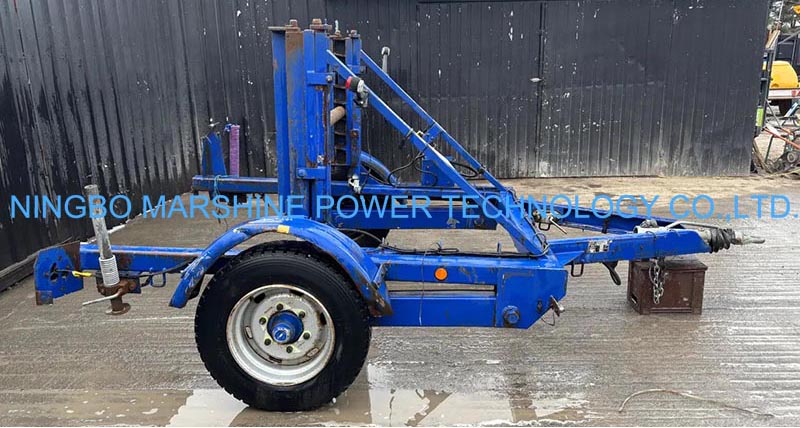
Selecting the appropriate unit requires evaluating mechanical specifications to ensure the equipment matches the dimensions of the cable drums handled on site. Crucially, operators must verify towing-vehicle compatibility. This involves matching the trailer's Gross Vehicle Weight Rating (GVWR) and maximum payload to the tow vehicle's capacities, ensuring the tongue weight falls within safe operational limits, and confirming compatibility with the required hitch class (such as heavy-duty pintle hooks or ball hitches). It is also necessary to verify local road regulations and ensure the trailer's design complies with regional axle load limits.
Capacity, Size, and Reel Compatibility
The most critical specifications are maximum payload capacity and reel compatibility. Operators must measure the drum flange diameter and overall drum width, comparing these figures against the trailer's internal frame dimensions to ensure sufficient clearance and prevent rubbing during payout. Proper weight distribution across the chassis is vital for towing stability. Spindle diameter is another crucial metric; a 76 mm spindle may support lighter telecom loads, whereas a 110 mm solid steel shaft is necessary to handle the stress of a 5,000 kg spool. Below is a comparison of general industry norms. Disclaimer: These figures are strictly illustrative general industry norms; actual capacities, dimensions, and spindle requirements vary significantly by manufacturer, region, and specific engineering standards.
| Trailer Class | Max Payload (kg) | Max Reel Diameter (mm) | Typical Spindle Size (mm) | Best For |
|---|---|---|---|---|
| Light Duty | 1,000 - 2,500 | 1,600 | 60 - 75 | Telecom, Fiber Optics |
| Medium Duty | 3,000 - 5,000 | 2,400 | 76 - 90 | Distribution Grids |
| Heavy Duty | 6,000 - 10,000+ | 3,200+ | 110+ | High-Voltage Transmission |
Brakes, Axles, Frame, and Safety Features
Beyond capacity, chassis design and safety components dictate highway compliance and off-road durability. While specifications vary widely by manufacturer and region, industrial trailers often feature hot-dip galvanized structural steel frames with thick-walled tubular construction to resist torsion when hauling loads over uneven terrain. For braking, overrun auto-reverse mechanical systems are common on lighter units, while heavier models require pneumatic or air-over-hydraulic brakes (such as DOT or ECE R13 compliant systems) to decelerate safely from highway speeds. Always verify braking compatibility with the towing vehicle. Tandem axle configurations on heavy-duty models improve load distribution. Required safety components include ISO-compliant LED lighting, approved reflective tape, and mechanical parking props at the rear to stabilize the unit during high-tension cable pulling. To maintain safety and performance, buyers must implement strict inspection and maintenance schedules, such as daily pre-trip visual checks, monthly brake pad inspections, and annual hydraulic fluid replacement and actuator lubrication.
How to Select the Right Supplier
Equipment specifications must be backed by strict quality control and after-sales support. Sourcing equipment from an established supplier ensures the fleet remains operational and compliant over its service life.
Supplier Evaluation Checklist
When vetting a supplier, use a vendor-agnostic checklist focused on manufacturing standards and support capabilities. Key evaluation criteria include:
- Certifications: Verify active quality system certifications, such as ISO 9001 for manufacturing processes.
- References: Request verifiable client references and case studies from similar power grid or telecom projects.
- Parts Availability: Ensure the supplier maintains a highly accessible inventory of critical wear parts, such as spindle collars, hydraulic seals, and brake components.
- Service Support: Confirm the availability of technical support for troubleshooting hydraulic or pneumatic systems.
Evaluating these factors ensures the supplier can support the equipment through its entire lifecycle, minimizing operational downtime.
Total Cost, Support, and Long-Term Value
The lowest upfront price does not always equate to the best long-term value. Procurement teams must first weigh acquisition alternatives—such as renting or leasing for short-term projects versus purchasing for ongoing infrastructure rollouts.
Further reading:
Key Takeaways
- Match the trailer payload rating to the heaviest loaded reel, with typical capacities ranging from 1,000 kg to 10,000 kg depending on the project scale.
- Measure the reel flange diameter and overall drum width before purchase to ensure the trailer frame provides enough clearance for safe transport and payout.
- Select a dual-purpose payout trailer when cable must be unspooled directly on site, and use a transport-only trailer when separate lifting equipment is available.
- Verify tow vehicle compatibility by checking GVWR, hitch class, tongue weight, axle load limits, and local road requirements before operating on public roads.
- Choose hydraulic lifting and adjustable braking features when handling multi-ton drums to reduce manual lifting risks and control reel rotation during payout.
Frequently Asked Questions
What is a reel transport trailer used for?
A reel transport trailer is used to load, move, and sometimes pay out large cable drums during underground cable pulling, aerial stringing, utility distribution, and transmission projects.
What payload capacity should I choose?
Choose a trailer with a rated payload above your heaviest loaded cable drum. Common models range from about 1,000 kg for distribution work to 10,000 kg for heavy transmission projects.
Should I choose a transport-only or payout trailer?
Choose transport-only models when cranes or forklifts unload reels on site. Choose payout models when crews need to lift the drum and unspool cable directly from the trailer.
Why is reel size compatibility important?
The drum flange diameter and overall width must fit within the trailer frame with enough clearance to prevent rubbing, poor alignment, or unsafe payout during operation.
Do reel transport trailers need hydraulic lifting systems?
Not always, but hydraulic lift arms help trained crews raise heavy drums safely without separate cranes. Manual pumps suit lighter or less frequent use, while motorized hydraulics improve speed.